

In short: A meta description analyzer tool compares the HTML metadata of a webpage to the latest Google display standards. Checks pixel width, truncation risk, keyword presence and duplicate usage. They catch your meta tags by giving live SERP previews, and help you set your titles/meta for maximum click through rates from organics (Red) alongside semantic relevance (Blue).
The same is true for organic search. No longer is it just about strict keyword matching, but increasingly a more fluid dynamic as results are driven by intent. This vicious cycle is a constant struggle for most marketing leaders and SEO managers to keep being on the radar. When you publish a page, those are your main conversion assets in the SERPs, as they are basically your title tag and meta description. Still, common desktop text editors are unable to demonstrate how users would ultimately see these elements.
A meta description analyzer tool is a middle ground between your CMS and the SERP that appears in live updates. These platforms will review your HTML metadata for exact pixel match, avoiding awkward truncation which can undermine user trust. At scale, optimized metadata drives organic revenue for medium to large enterprises.
You need time to rely on guesswork for your metadata in the first place, only for doing that waste crawl budget and lower down CTR. With a comprehensive audit process for your metadata, SEOs gain a unique competitive edge. This is an ultimate guide to use a meta description analyzer tool in 2026 that meets the semantic search perception of Google and your site.
Introduction
We advocate meta description analyzers for some crucial reasons in enterprise SEO.
These tools are revolutionary in the way that they allow marketing teams to optimize metadata using hard data rather than guesswork. Google modifies snippets a lot depending on the search query of the user. A Recent Analysis [SEER Interactive, 2026] Shows That Google Rewrites Meta Descriptions For Approximately 60 to 70% Of Queries Title tags see some of the most heavy editing; in about 76% of instances, Google rewrites them [SEER Interactive, Q1 2025].
However, a highly optimized description is still important even though those rewrite rates are so high. One in four pages that currently rank highly have no meta description at all. The top organic result receives around 40% of clicks when you offer a high quality snippet. Metadata optimization drives organic sales uplifts of 32% [Sink or Swim Marketing 2025] and increases revenue per session by 6% to 10% in high intent ecommerce categories [Plerdy, 2024 to 2025].
While metadata does not directly rank your page, it determines if someone clicks on your listing. You should think of your meta description as a paid ad which is sitting in your organic listing. An analyzer tool checks that this ad is chunked well, easy to scan and semantically relevant to search intent.
Pixel limit of Google search result and character counts
Character counts are a general guideline and one of the most common misconceptions about meta tag SEO. Google does not count characters. The search engine counts pixels by width. A title that consists of wide characters (such as M, W and D) will get truncated sooner compared to a title made of narrow letters such i, l, f and t. Now two titles can have the same character limit but one will fit perfectly and one isn’t.
Their pixel width is used by a meta description analyzer tool that offers accurate truncation warnings based on where the cuts were made. Character counts are a nice way to get an indicator but however pixel measures are what will ultimately be rendered on your screen.
Current display limits in SERP are as follows:
| Device Type | SEO Element | Pixel Limit | Approximate Characters | Display Behavior |
| Desktop | Meta Title | 525 to 600px | 50 to 65 characters | If exceeded, ellipsis truncation. |
| Mobile | Meta Title | 500px | 50 characters | Wrap to a second line via area or display, depending on space? |
| Desktop | Meta Description | 920px | 150 to 158 characters | Regular display limit on pretty much any request. |
| Mobile | Meta Description | 680px | 120 characters | The display is too small to limit the time standard. |
| All Devices | Rich Snippets | Up to 1,500px | Variable | Google raises the limit for question queries |
The practical sweet spot proves out to be writing the most essential information, that is your main keyword, key value proposition and call to action in 120 characters. From 140 to 158 characters everything works as a sort of desktop extra. If you push over 158 characters, you’re in the danger zone where google will truncate to the first full word. Bear in mind that Google indexes the complete HTML tag regardless of truncation visible to users, so if you use a more extended description, it will not harm your indexation and only for good shape shows even because the user will not perform this display entirely.
What is actually audited by a meta description analyzer tool?
Enterprise SEO teams need the ability to use more than just simple character counting tools. Meta description analyzer tool performs a multi point checkup on your metadata to make sure you get the best SERP.
How the tool assesses length and pixel width
This tool gets the exact pixel width of your text based on how Google actually renders that font (usually Arial or Roboto these days) at the time of this writing. It also separately flags truncation risks for desktop and mobile devices. The best platforms deliver device specific verdicts, rather than a single blended score, enabling SEO managers to make targeted changes.
Importance of SERP Render Preview
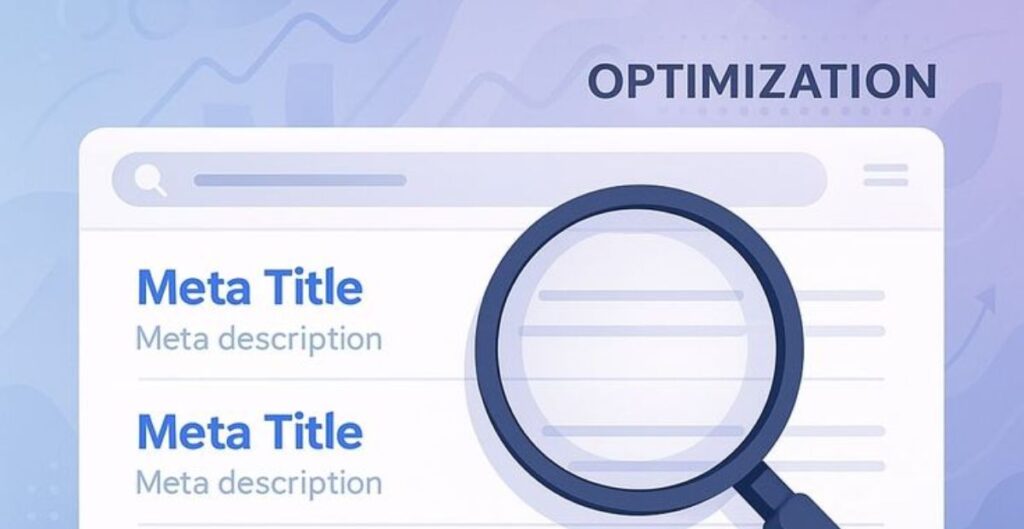
The desktop and mobile screens both show a live simulation of your Google snippet to show you exactly where the ellipsis cuts in. This makes it 100% clear before you publish. With interactive SERP previews, you can edit your copy right then and there while making sure your call to action never falls below the fold.
The Perfect Mastering Guide on how Meta Title Checker Tools Helps You Elevate Your Content In a Positive Way in 2026
What is Chip presence check Chips
Bold text in search result: Google invokes certain query matched terms within the meta description. If the description has no mention of your primary keyword, you lose that visual emphasis in the SERP. It checks the semantic keywords to see if they are sprinkled along the body text in a natural way, and this directly impacts CTR for applicable searches.
Duplicate detection of the metadata
Reuse of a description over several pages both reduce the signals relevant for the human and squander an invaluable crawl budget. This problem is especially common in ecommerce Category / Collection pages, location pages, and faceted navigation. The analyzer utility crawls your domain to capture duplicate metadata, making certain each URL communicates a distinct offering for the search engine.
How are CTR signals scored?
Advanced analyzer tools measure if you have action verbs (like discover, compare or download), numbers, social proof and an explicit value proposition. Including these elements is highly associated with above average CTR (Click Through Rate) Organic.
Does the tool indicate Google rewrite risk?
The platform also identifies the probability of your description being replaced by Google’s algorithm. So it does this by looking at how your metadata compares to the actual on page content of that page. The lower the intent match quality, the more likely this would be a complete algorithm rewrite.
Best Practices: Meta Descriptions for AI Overviews & Generative Search
Optimizing metadata in a sophisticated manner is what will be needed to adapt to the generative engine optimization transition. Google’s AI Overviews take content straight from web pages to build summarized answers for searchers.
Your meta descriptions serve primarily as a relevance signal for being featured in these AI generated responses. Without proper attention paid to title & description structure, intent match, and schema markup this page will have a much lower chance of landing a citation. Using a meta description analyser tool breaks down your summary to make sure it is short, accurate, and in keeping with what the user wants an answer to.
Google specifies that metadata is rewritten dynamically on a per query basis. Same URL can yield four totally different snippets across four totally different search results. It means that the intent match quality of your real page content is as significant a signal for Google as your description tag. Training is throughout the data of October 2023 You have to write as semantic intent, this must show a specific context topic in which AI systems are looking at when generating answers.
Voice assistants need succinct, concise snippet copy as well. A description that has been well optimized increases the odds of your content being read when Google responds to a spoken request with a voice. Even in a zero click world, where the user would never even see your site, your snippet is still an invaluable brand impression. This is why even if you rank well, a weak description hurts CTR for those who intend to click through: it leaks traffic down in the results pages to lower positioned competitors.
The Perfect Mastering Keyword Density Checker: SEO Agency Guide
The best practices for the SEO literate teams
Discipline: A good metadata strategy is a journey which needs constant analysis of data. Get technical with these guides to boosting the return on your SEO investment.
- Key details, first: Your number one keyword, your benefit for the reader, and your CTA should all be stated in 120 characters or less. Your original description might only get through 60% to 70% and be rewritten. With front loading, the engine registers your core intent as a very strong relevance signal.
- Use semantic intent: Google is a semantic search engine. Jargon heavy, exact match keyword stuffing in the descriptions hurts your results. Write a copy that is based on the context of the topic and user intent. However, it gives your snippet a higher chance of showing up in a preformatted fashion.
- Pixel audit, device wise preview: Use a SERP preview tool as a double check before going live on any high traffic page. When working with character counts, both ignore visual width. Light it up with pixels mentraining to ensure your messaging stays alive.
- Do not duplicate descriptions: Duplicate metadata is a bad crawl signal. It slows down indexing and renders Google’s task of distinguishing pages for your domain much more difficult. Every indexable URL should have unique, targeted descriptions.
- Allocating real estate to rich snippet elements: The SERP is a limited canvas, and date stamps, star ratings, and breadcrumbs each occupy some visual space. Mildly shorten your meta descriptions for the lower schema pages. What appears to be perfectly safe in a standard preview tool could get truncated when rich results render next to it.
- Consider the description an ad: Use the same strategies you use to write compelling headlines for Google Ads. Use clarity, urgency, specificity and a real world benefit to compel the user to click on.
What are Keywords Clusters you need to Target for Optimization of Meta Description?
If you build content, digital tools or landing pages around metadata optimisation then targeting search intent is a must. We use a meta description analyzer tool which lists out these specific clusters.
Tool and transactional intents
These are the terms users search for when they want instant access to software. Meta scrapper free, SERP preview tool, Google snippet preview tool, title tag checker and pixel length checker (MetaChecker). The majority of clicks in this category are driven by the “free” modifier, which acts to push solo SEO practitioners and teams from an agency.
Informational intents
These searchers require technical instructions and best approaches. Stick with content around meta description size, what is a meta description, suggested meta description length and title length checking tool.
Technical and audit intents
These queries are used a lot to address bulk solutions where enterprise teams look for thousands of URLs. Concentrate on “SEO metadata checker,” “HTML meta tags audit,” “duplicate meta description check” and “website indexing signals.” These users frequently ask for integrations with large crawling tools.
Emerging AI era intents
Marketing leaders looking ahead know they need to find ways to survive generative search updates. Follow and target the phrases like “AI overview optimization,” “generative search optimization,” “AI answer engine optimization,” “AI seek snippet.”
Optimize your organic CTR with carefully crafted metadata
Semantic search, dynamic rewrites, and AI Overviews may require accurate data and executable software. The meta description analyzers basically gives you the much needed insights in real time to perfect your snippets before even making it into the index of Google. Through auditing pixel widths across tags, avoiding deployment of duplicate tags, and doubling down on semantic intent, SEO managers can safeguard increased CTRs with a quantifiable positive ROI tool. While these technical strategies can be implemented today to secure your rankings and seize the organic traffic your business rightly deserves.
Frequently Asked Questions
Meta description analyzer tool what is it?
Meta description analyzer a tool that checks the page title tag along with meta description and test them against what Google displays. Checks pixel width, character counts, keyword presence and truncation risks to ensure snippets display properly in SERPs.
You might be wondering, Why is Google changing my meta descriptions?
Google will replace a meta description if the search engine finds something else on your webpage that better answers what the user is looking for in their particular search. Meta description analyzer tool helps you to write tags according to user intent, thus the risk of getting your meta descriptions rewritten by Google algorithm is low.
The end question: Should I check my meta tags by characters or pixels?
When it comes to measuring your meta tags, measure in pixels not characters. Google gives each element in a SERP a pixel width (920px for desktop descriptions, 600px for desktop titles). Thicker letters use a wider space so the only way to know if text will be truncated is by measuring in pixels.
Does generative AI change the game for meta description optimization?
Meta descriptions help Generative AI and AI Overviews to show relevance signals for a page. Descriptive text that is concise, factual, and well organized are more likely to be quoted as primary sources by AI search engines in answers they generate.
What should be the optimal mobile meta description length?
A good mobile meta description should be 120 characters or about 680 pixels long. Since mobile devices have limited horizontal space, so prioritize the high value keywords or propositions in that safe zone.