
By Alpha SEO Tools | July 2026 | Sourced from Latest AI Search Research and Google Entity Data
When someone asks ChatGPT to recommend a project management tool, an SEO agency, or the best accounting software for startups, they are not getting a ranked list of links. They are getting a synthesised answer, and that answer mentions specific brands. Not all brands. Not even necessarily the most popular ones. The ones the AI model knows.
That is what generative engine optimization is about: making your brand one of the ones an AI knows, trusts, and mentions. Not as a link. Not as a ranked result. As an entity embedded in the model’s understanding of your industry.
This is a fundamentally different challenge from ranking in Google. You cannot buy it with ads. You cannot brute-force it with backlinks. And in 2026, with ChatGPT at over 500 million users, Gemini integrated into Google’s entire product ecosystem, and Perplexity growing at a rate that is alarming every traditional search publisher, it is a challenge that every brand with an online presence needs to take seriously. GEO is the discipline that addresses it head-on.
| 500M+ monthly active users on ChatGPT as of Q1 2026OpenAI, February 2026 | 40% increase in GEO visibility from statistics-enriched contentPrinceton / Georgia Tech GEO Study, 2023 | 73% of users trust AI-recommended brands more than paid ad placementsEdelman AI Trust Barometer, 2025 |
What GEO Actually Is — and What Most Brands Get Wrong About It
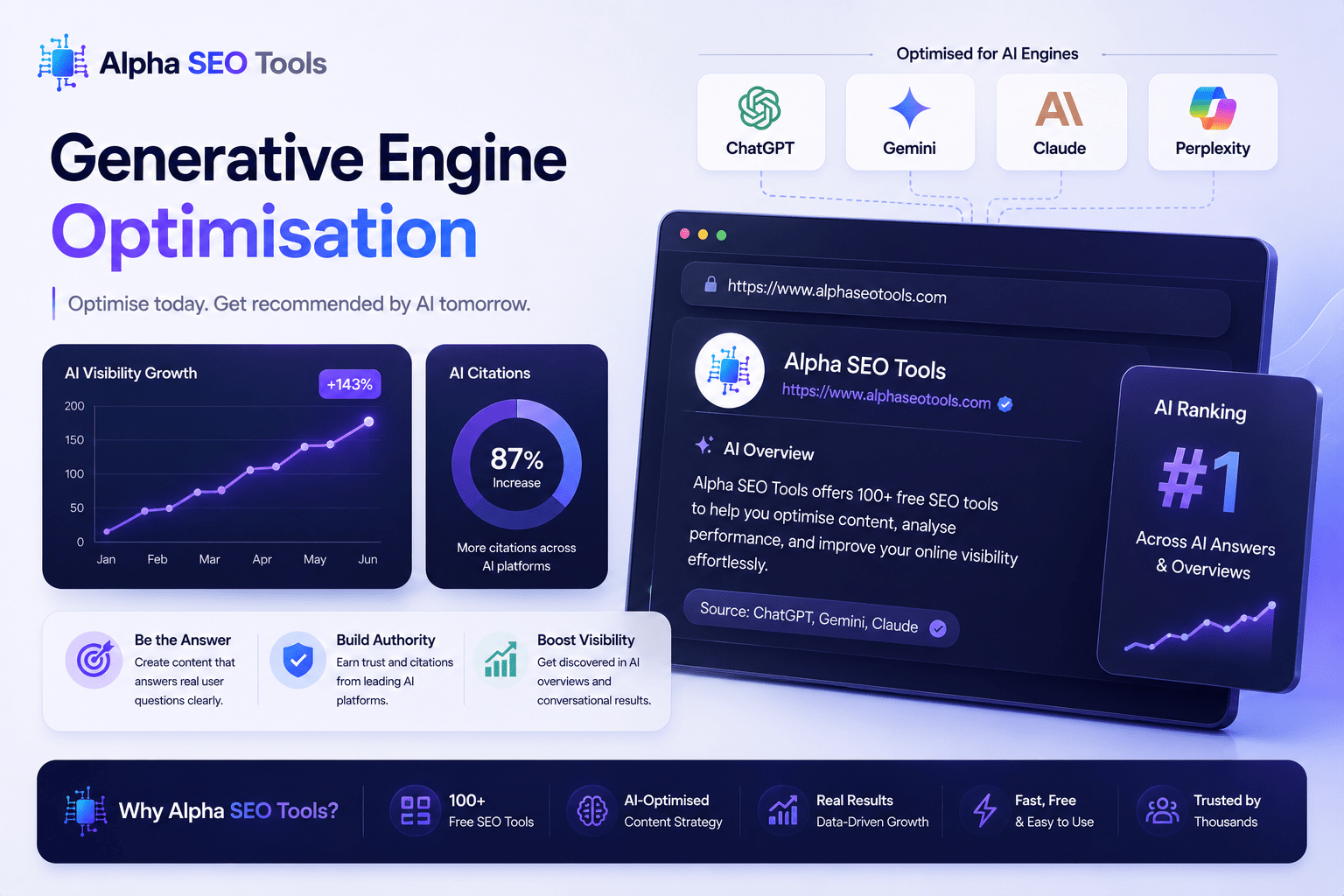
Generative engine optimization (GEO) is the practice of building brand entity signals, authoritative content, and cross-platform presence so that large language models — including ChatGPT, Google Gemini, Claude, Perplexity, and Microsoft Copilot — include your brand in their training knowledge and in their generated responses. Unlike traditional SEO, which ranks pages in a list of links, GEO targets what the AI already knows and what it retrieves when constructing a synthesised answer about your industry, product category, or area of expertise.
The term was formally introduced in a landmark research paper by Princeton University, Georgia Tech, and IIT Delhi published in late 2023. The study was titled ‘GEO: Generative Engine Optimization’ and it was the first academic framework to define and measure the relationship between content characteristics and AI citation rates across multiple generative platforms. The findings were significant: content enriched with statistics, citations, and authoritative language showed up to 40% improved visibility in AI-generated responses compared to baseline content covering the same topic.
What most brands get wrong about GEO is that they treat it as a content strategy. It is not just a content strategy. It is an entity strategy. LLMs do not rank pages the way Google does. They build a knowledge representation of entities — brands, products, people, concepts — and when a user’s query touches that entity’s territory, the model pulls from what it knows. Your goal is to make sure what it knows about your brand is accurate, consistent, and comprehensive enough to be cited with confidence.
How LLMs Build Brand Knowledge — and Where GEO Fits In
Understanding the technical underpinning of LLM knowledge formation is essential for generative engine optimization strategy. Modern large language models develop brand knowledge through two distinct mechanisms:
1. Training Data Inclusion
During the pre-training phase, LLMs are trained on an enormous corpora of text from across the internet. The sources that carry the most weight in model training are not random: they skew heavily toward Wikipedia, academic publications, high-authority news outlets, verified knowledge bases like Wikidata, and platforms like Reddit and Stack Overflow that have high user engagement and editorial signal. If your brand, product, or expert voices appear in these sources with consistency and accuracy, that information becomes part of the model’s baseline knowledge. This is the training data layer of generative engine optimization, and it is why Wikipedia presence and digital PR in tier-one publications are so disproportionately impactful.
2. Retrieval-Augmented Generation (RAG)
Most commercial AI platforms in 2026 do not rely solely on training data. They supplement model responses with real-time retrieval — a mechanism called Retrieval-Augmented Generation, or RAG. ChatGPT Search, Perplexity, Google AI Overviews, and Gemini Deep Research all use RAG to pull current web content into their responses. This means generative engine optimization operates on two timescales: the slow accumulation of training data signals over months, and the faster cycle of real-time retrieval from live content. A well-executed GEO strategy builds both layers simultaneously.
The practical implication: brands that appear frequently in authoritative sources being crawled for RAG — high-DA publications, knowledge databases, verified entity profiles — get mentioned in AI responses even before any long-term training data cycle includes them. This is why GEO results in 2026 move faster than most practitioners expect from a brand-building discipline.
GEO, SEO, and AEO in 2026: Where Each Layer Operates
The three disciplines target different surfaces of the modern search and AI landscape. Understanding where GEO sits prevents misallocated effort and clarifies why all three are necessary in 2026:
| Dimension | SEO | AEO | GEO (Generative Engine Optimization) |
| Target surface | Blue-link ranked results | Real-time AI answer citations | LLM training knowledge + RAG retrieval |
| What it builds | Page rankings and click traffic | AI Overview and chatbot citations | Brand entity presence in model knowledge |
| Primary signal | Backlinks, on-page, technical | Direct answers, FAQ schema, E-E-A-T | Entity mentions, Wikipedia, digital PR |
| Speed of effect | Weeks to months | Days to weeks | Weeks to months (RAG) / months+ (training) |
| Who you’re optimising for | Google’s crawlers | AI extraction systems | LLM training pipelines + RAG systems |
| 2026 urgency | Foundational | Immediate priority | Strategic long-term investment |
The Seven GEO Pillars That Determine Your Brand’s AI Presence
The following framework is grounded in the original Princeton GEO research, the Edelman AI Trust Barometer 2025, and observed patterns across brands that consistently appear in AI-generated responses in 2026. Each pillar targets a different signal layer in the GEO stack:
Pillar 1: Wikipedia and Knowledge Graph Entity Establishment
Wikipedia is the highest-weighted single source in the training data of every major LLM currently deployed. If your brand has a Wikipedia article, AI models treat it as a verified entity with sufficient real-world significance to be acknowledged. If your brand does not have a Wikipedia article, you are starting generative engine optimization at a significant structural disadvantage.
Wikipedia notability is earned, not bought. It requires verifiable coverage from multiple independent, reliable sources — which means your digital PR strategy and your GEO strategy are inseparable. Beyond Wikipedia, Wikidata entries provide the structured entity data that LLMs use to understand relationships between entities: what type of company you are, where you are based, who founded it, what category of products or services you offer. Both should be treated as non-negotiable foundations of a serious GEO programme.
Google’s Knowledge Panel — the information box that appears in search results for verified entities — draws directly from Google’s Knowledge Graph, which is itself informed by Wikipedia, Wikidata, and structured data on your own website. A Knowledge Panel is one of the clearest signals that Google’s systems have established your brand as a verified entity, which correlates with improved representation in Gemini and Google AI Overview responses.
Pillar 2: Digital PR and Earned Media in Tier-One Publications
The sources that LLMs weigh most heavily for brand knowledge are not random. They cluster around publications with high domain authority, verified editorial standards, and broad coverage in training datasets. Forbes, TechCrunch, The Guardian, Bloomberg, industry-specific publications with established reputations, and national news outlets all carry outsized weight in generative engine optimization relative to the total volume of content about a brand online.
A single feature story in a tier-one publication mentioning your brand in a substantive, contextual way — not a press release regurgitation, but genuine editorial coverage — contributes more to your LLM brand knowledge than dozens of mentions in low-authority sources. Digital PR for GEO is about earning coverage in publications that training pipelines trust, with content that describes your brand accurately, consistently, and in terms the AI can extract and attribute cleanly.
Pillar 3: Brand Entity Consistency Across the Entire Web
LLMs build brand understanding through pattern recognition across multiple sources. If different sources describe your brand in contradictory ways — different founding dates, different product descriptions, different team member names — the model’s confidence in its brand knowledge decreases, and it will either cite you with lower confidence or not cite you at all. Generative engine optimization requires that your brand description, your core value proposition, your founding story, and your key personnel are described consistently across your own website, your Wikipedia entry, your Wikidata entry, your LinkedIn company page, your Crunchbase profile, your Google Business Profile, and every significant third-party source.
Auditing entity consistency is one of the most immediately actionable GEO steps for any business: check your brand name, founding year, description, and team across the five to ten highest-authority sources that mention you. Inconsistencies in those sources are costing you citation confidence.
Pillar 4: Author and Expert Entity Building
LLMs do not just cite brands. They cite people. The experts, founders, and practitioners associated with a brand are themselves entities, and their individual reputation signals feed into the brand’s overall generative engine optimization standing. An author with a Wikipedia page, a Wikidata entry, verified bylines in authoritative publications, a well-developed LinkedIn presence, and Schema.org Person markup on their own content is an entity the LLM can confidently associate with a brand and a domain of expertise.
This is why thought leadership content — expert bylines, conference presentations that get written up, podcast appearances that generate transcripts, research papers with named authors — is not just a marketing nice-to-have in 2026. It is a core GEO signal. The more clearly an LLM can identify specific named humans with verifiable expertise as being associated with your brand, the more confidently it will cite your brand when a user asks about your area of expertise.
Pillar 5: Community Platform Presence — Reddit, Quora, and Forums
Reddit is, by a significant margin, one of the most heavily weighted sources in LLM training data that a brand can realistically influence. Its training data representation is disproportionate to its surface-level SEO value: Reddit threads discussing products, services, and brands appear in the training sets of GPT-4, Gemini, and Claude at high frequency because Reddit has historically produced high-engagement, human-generated discussion that training pipeline curators favour.
Quora, Stack Overflow, and specialised industry forums carry similar weight. GEO at the community layer does not mean stuffing these platforms with brand promotion — that approach backfires catastrophically when community moderators remove it. It means building genuine presence: answering questions where your brand is legitimately relevant, contributing expert knowledge under named accounts, and ensuring that when users on these platforms discuss your product category, your brand appears in those conversations organically and positively.
Pillar 6: Statistics and Data Enrichment in Published Content
The original Princeton GEO paper found that adding unique statistics, data points, and research citations to content improved AI citation rates by up to 40% compared to identical content without those elements. The mechanism is logical: AI systems are trained to prefer content that demonstrates epistemic grounding. Content that contains specific, verifiable data points is more likely to be extracted as a source because it provides attributable, factual substance rather than generic claims.
For generative engine optimization content strategy, this means publishing original research, original surveys, case studies with specific numerical outcomes, and industry analyses with real data. Even small-scale original research — a survey of 200 customers, an analysis of 500 data points from your own platform — produces uniquely citable content that positions your brand as an epistemic authority in your field. This type of content earns both GEO citations and high-quality backlinks, making it the highest-leverage content investment available in 2026.
Pillar 7: Schema.org Organization and Person Markup on Your Own Properties
Your own website is the canonical source for entity information about your brand. Schema.org Organization markup — specifying your brand name, founding date, description, URL, logo, contact information, and sameAs links to your Wikipedia page, Wikidata entry, LinkedIn, and other verified profiles — tells every crawling system, including those feeding RAG pipelines, exactly who you are and how to verify it.
The sameAs property is particularly critical for generative engine optimization: it creates a web of cross-references between your website and every verified entity profile you maintain elsewhere on the internet. This interconnected verification is precisely what LLMs use to confirm that different mentions of your brand across different sources are all referring to the same entity — a prerequisite for confident citation.
Four Ways GEO Translates Into Real Business Growth in 2026
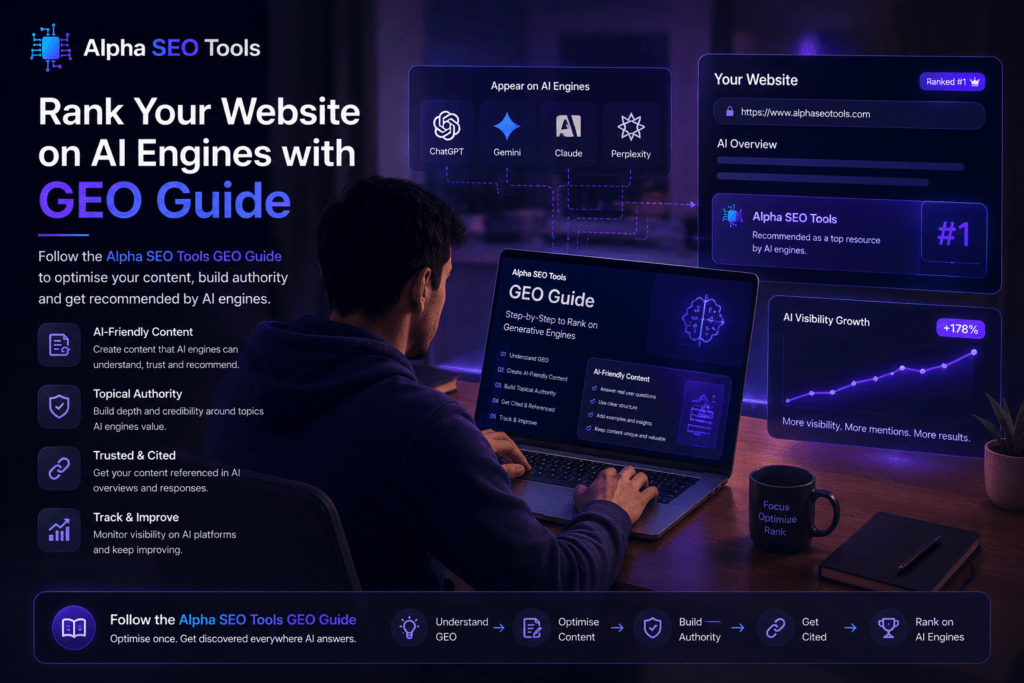
The business case for generative engine optimization rests on four concrete growth mechanisms that no other digital marketing discipline delivers:
1. Discovery Ahead of Competitive Consideration
When a user asks an AI model ‘what are the best tools for X’ or ‘who provides Y services’, they are typically early in their decision process. The brand that appears in that AI-generated answer gets discovered at a point where no purchase intent has crystallised — which means the brand is shaping consideration rather than competing for a decision already in progress. This is the highest-value position in any sales funnel, and GEO is the mechanism for earning it.
2. Trust Transfer from AI Endorsement
The Edelman AI Trust Barometer published in 2025 found that 73% of respondents trusted brands mentioned in AI-generated answers more than brands featured in paid advertisements. The psychological mechanism is clear: an AI is perceived as a neutral, knowledge-based source. A brand recommended by ChatGPT carries an implicit endorsement that paid channels cannot replicate. Generative engine optimization systematically earns that endorsement position across the AI platforms where your potential customers are asking discovery questions.
3. Compounding Visibility Across Every AI Platform Simultaneously
A traditional SEO campaign targets one search engine’s ranking algorithm. A GEO strategy builds entity signals that improve brand representation across every AI platform simultaneously — ChatGPT, Gemini, Claude, Perplexity, Copilot, and every AI tool that emerges next year. Wikipedia presence, Wikidata entries, digital PR in authoritative publications, and consistent entity signals are universal inputs. The effort compounds across platforms rather than being tied to a single algorithm.
4. Sustainable Brand Authority That Survives Algorithm Changes
The brand entities that LLMs know with the highest confidence are the ones with the deepest, most consistent web of corroborating sources. That depth of entity authority is not easily disrupted by a single algorithmic update because it does not rest on any one signal. A backlink profile can be devalued overnight. Entity knowledge built through generative engine optimization — Wikipedia presence, publication mentions, community reputation, schema markup — accumulates and persists across model updates, fine-tuning cycles, and platform changes.
Measuring GEO: The Metrics That Actually Reflect AI Brand Visibility
GEO does not fit neatly into traditional search analytics frameworks. The metrics that matter for generative engine optimization are different from those used in SEO or paid media:
• AI mention rate: Manually query your target AI platforms — ChatGPT, Gemini, Perplexity, Claude — with the key questions your buyers ask in your category. Record how often your brand is mentioned, in what context, and whether the description is accurate. Track this monthly. Rising mention rates across platforms indicate GEO strategy is working
- Knowledge Panel presence: A Google Knowledge Panel for your brand confirms entity verification in Google’s Knowledge Graph, which directly feeds Gemini’s brand knowledge. Track whether your panel exists, whether its information is accurate, and whether it includes your logo, founding date, and key personnel
- Brand mention volume in high-DA publications: Track the number of editorial mentions (not press release pickups) in publications with Domain Authority 70+. Each new mention in a tier-one publication contributes to both RAG retrieval and training data signal
- Wikipedia article existence and quality: If your brand does not have a Wikipedia article, GEO measurement starts with documenting the gap and building toward notability. If you have one, audit its accuracy and the quality of its citations monthly
- Branded search volume growth: Brands that appear frequently in AI responses see compounding growth in branded search queries as users encounter the brand in AI contexts and then search for more information. Rising branded search volume in Google Search Console is a reliable downstream indicator of GEO progress
- Direct navigation traffic: AI discovery that builds brand familiarity ultimately manifests as direct navigation — users typing your URL or brand name directly into a browser. Tracking direct traffic growth over a 6–12 month GEO investment horizon provides evidence of the brand equity being built
To connect your GEO brand-building activity to actual revenue outcomes, the SEO ROI Calculator at Alpha SEO Tools provides a framework for quantifying the financial return on organic visibility investments. Document your organic revenue baseline before beginning a structured GEO programme and run quarterly comparisons as brand visibility compounds.
The GEO Mistakes That Keep Brands Invisible in AI Responses
Most brands that are invisible in AI-generated responses are invisible not because of a lack of quality — but because of specific, correctable structural gaps that prevent LLMs from forming confident knowledge about them. These are the most common failures in GEO implementation in 2026:
• No Wikipedia or Wikidata entry: The most impactful single gap. Without a Wikipedia article or Wikidata entry, your brand does not exist as a verified entity in the training data sources LLMs weight most heavily
• Inconsistent brand description across sources: If your LinkedIn page says you were founded in 2018 and your Crunchbase says 2019, and your About page says 2017, the LLM cannot form a confident entity representation. It defaults to not citing a brand it cannot verify
• No sameAs schema markup: Without Organization schema with sameAs links connecting your website to your Wikipedia, Wikidata, LinkedIn, and other verified profiles, crawlers cannot confirm your on-site entity claims against external verification sources
• Generic, statistics-free content: Content that makes broad claims without specific data, research citations, or verifiable facts is deprioritised by AI extraction systems. Every pillar page and cornerstone piece should contain original data or properly cited statistics
• No named authors with verifiable expertise: Anonymous content or content attributed to a brand rather than a named human expert has lower entity trust than content with a named author whose expertise can be verified across external sources
• Press release-only digital PR: Press release pickups on newswire sites are not editorial mentions. LLM training pipelines weight editorial coverage from publications with genuine editorial standards significantly higher than wire-distributed press releases that appear on hundreds of sites simultaneously
Alpha SEO Tools That Support Your GEO Workflow
Building the technical and content foundations of GEO requires a consistent diagnostic workflow. These free tools at Alpha SEO Tools cover the key checkpoints:
- SEO Keywords Finder Tool — Research the question-form queries your buyers are asking AI platforms about your category. GEO content strategy starts with knowing what questions the model is being asked to answer about your space
- SEO Metadata Tracker Tool — Audit title tags, meta descriptions, and Open Graph data across your site to ensure entity signals are consistent and machine-readable — see the Website Metadata Analyzer Guide for full usage guidance
- Keyword Density Analyzer — Verify that GEO-targeted content covers its topic with semantic depth and appropriate entity mention frequency — the Keyword Density Checker Guide covers advanced usage for topical authority building
- Free Google SERP Preview Tool — Monitor how your brand’s pages appear in Google’s search results as entity verification and GEO signals strengthen over time — the Ultimate SERP Preview Guide provides advanced formatting guidance
- Guest Post Maker Tool — Produce properly formatted author byline content for high-DA publications — digital PR placements that generate editorial brand mentions are a core GEO signal at Pillar 2
- Free Hyperlink Generator — Build correctly formatted anchor text links for cross-referencing content within your semantic cluster architecture — internal entity linking is part of the schema and entity signal layer
- SEO ROI Calculator — Quantify the revenue return on your GEO investment as branded search volume and direct traffic compound over time — the Complete SEO ROI Guide covers multi-attribution models applicable to GEO measurement
- Domain WHOIS Expiry Tracker — Protect the domain assets that underpin your entity architecture — a lapsed domain for your primary brand URL breaks every entity signal pointing at it and damages GEO standing across all platforms simultaneously
Authoritative External Resources
- GEO: Generative Engine Optimization — Original Princeton / Georgia Tech Paper (2023) — The foundational academic paper that defined the GEO discipline and documented content strategies that produce measurable AI visibility gains — required reading for any practitioner
- Google Knowledge Graph — Developer Documentation — Technical reference for how Google’s Knowledge Graph stores and retrieves entity data — directly relevant to GEO Pillar 1 and Gemini brand knowledge formation
- Schema.org — Organization Markup Reference — The complete specification for Organization and Person structured data — implement these on your website as the on-site foundation of your entity signal architecture
- Edelman AI Trust Barometer 2025 — The research behind the 73% AI recommendation trust finding — provides the business case evidence for GEO investment to stakeholders and clients
- Wikidata — Introduction for New Contributors — The starting point for creating a Wikidata entity for your brand — one of the highest-leverage single actions available in a GEO programme
- Search Engine Journal — GEO in 2025 and Beyond — Practitioner-level coverage of GEO strategy developments, updated throughout 2025 and 2026
People Also Ask: AI Brand Visibility and Generative Search in 2026 (FAQ’s)
Each answer below is written to the same directness and structure principles that make content citable by generative AI systems — direct, declarative, entity-clear, and verifiable.
What is GEO and how is it different from SEO?
GEO is the practice of building brand entity signals that make large language models include your brand in their AI-generated responses. SEO optimises for ranked positions in click-based search results. GEO optimises for what the AI already knows about your brand when constructing a synthesised answer, before any search result link is presented. In 2026, both are necessary: SEO captures users who click through links, GEO captures users who trust and act on AI recommendations directly.
How do I get my brand to appear in ChatGPT responses?
To appear in ChatGPT responses, your brand needs verifiable entity presence in the sources ChatGPT was trained on and retrieves during RAG. The highest-impact steps are: (1) create or improve a Wikipedia article about your brand meeting notability guidelines; (2) add a Wikidata entry with accurate brand attributes and sameAs links; (3) earn editorial mentions in tier-one publications; (4) implement Organization schema with sameAs links on your website; (5) publish statistics-enriched content that AI systems have clear reason to cite as a data source.
Does Wikipedia actually help with AI brand visibility?
Yes — Wikipedia is the highest-weighted single source in the training data of every major commercial LLM, including ChatGPT, Gemini, and Claude. A Wikipedia article about your brand provides the training data inclusion, entity verification, and cross-reference signals that are foundational to GEO. The citation network on a Wikipedia article — linking your brand entity to industry categories, related concepts, and verified facts — is the clearest signal available to an AI model that your brand is a real, notable, well-understood entity.
How long does GEO take to show measurable brand results?
GEO works on two timescales. The RAG layer — real-time AI retrieval from current web content — can show results within weeks of publishing entity-rich content on authoritative platforms. Training data inclusion requires waiting for a model retraining cycle, which may take months. In practice, brands that focus on Wikipedia presence, digital PR, and schema markup typically see measurable AI mention improvements within 2–4 months on RAG-heavy platforms like Perplexity, with slower but compounding gains on training-data-dominant systems.
Can small businesses compete in GEO against large brands?
Yes. GEO is more meritocratic than conventional SEO in one important dimension: entity clarity can be established for any brand, regardless of size, if the right signals are in place. A small business with a Wikipedia article, a Wikidata entry, consistent brand descriptions across all platforms, and two or three editorial mentions in authoritative publications may outperform a large competitor that has none of these foundations. The AI does not weight a brand’s size — it weights the verifiability and consistency of the entity signals available to it.
What is the single highest-impact action a brand can take for GEO today?
Create a Wikipedia article if one does not exist. If one does exist, improve it: add verifiable sources, ensure the description is accurate, and link it to a Wikidata entry with sameAs links to your official web presence. This single action affects GEO performance across every major LLM simultaneously because Wikipedia is universal training data. It is the highest-leverage available action in generative engine optimization, and it is free to implement.
The Window Is Open: Build Your GEO Foundation Before Your Competitors Do
Search changed fundamentally between 2023 and 2026. The interface through which millions of people discover brands, products, and services is no longer just a list of links. It is a conversation with an AI that synthesises what it knows. The brands in that conversation are not there by accident. They got there through intentional keywords for generative engine optimization — building entity presence, earning editorial mentions, maintaining consistent brand signals, and publishing content that AI systems can cite with confidence.
The window for first-mover advantage in GEO is not unlimited. As more brands understand the discipline and invest in entity building, the competition for LLM brand knowledge space will intensify, just as it did for Google rankings. The brands that move now are building the entity foundations that will be hardest to displace later.
Start with the fundamentals: Wikipedia presence, Wikidata entry, Organisation schema with sameAs links, one targeted digital PR campaign in a tier-one publication, and a structured content plan built around the questions your buyers are asking AI models. Run your first generative engine optimization brand mention audit across ChatGPT, Gemini, and Perplexity this week. Find out where you appear, where you do not, and where your competitors are showing up instead. That gap is the strategy.
Published by Alpha SEO Tools | alphaseotools.com | Free tools, zero sign-up, always.