

By Alpha SEO Tools | alphaseotools.com | July 2026 | Admin: Alpha SEO Tools
Search did not die. It evolved into something that no longer needs you to click. When someone asks Google, ChatGPT, or Perplexity a question in 2026, the answer is already waiting above the fold: synthesised, structured, and sourced from whoever earned the citation. The brands and businesses being cited are not necessarily the ones ranking first. They are the ones that practised answer engine optimization before the rest of the market caught on.
This guide covers everything you need to understand and act on. What AEO is and how it differs from traditional SEO. How AI systems actually select the content they cite. The technical and content decisions that make a page citation-worthy. The specific tactics that get a business showing up in AI-generated answers right now. And critically, the metrics and habits that turn a one-off citation into a sustained competitive advantage.
Every piece of information in this article is grounded in current data and confirmed sources from mid-2025 through July 2026. Nothing here is speculation. The stakes are too high for that.
| 69%of Google searches end with zero clicksFrase Research, mid-2025 | 58%CTR drop at position 1 when AI Overview presentAhrefs, Dec 2025 (300k keywords) | 4.4xhigher conversion rate from AI-referred visitorsFrase platform data, 2025 |
What Answer Engine Optimization Actually Is
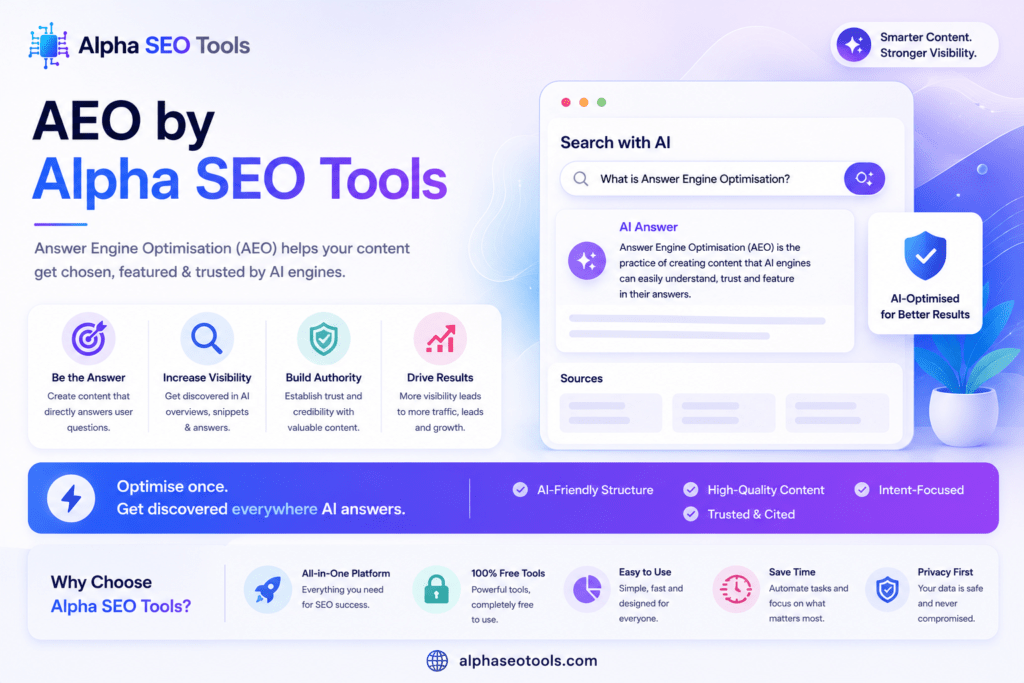
Answer engine optimization is the practice of structuring and positioning content so that AI-powered platforms select it as a source when generating direct answers to user queries. It is not a replacement for search engine optimization. It is what happens when you extend your SEO strategy to account for the fact that Google, ChatGPT, Perplexity, and voice assistants are no longer returning ten blue links. They are writing the answer themselves and choosing whose content to quote.
Google confirmed this framing directly in its May 2026 AI Search guide, which states that AEO and GEO are, in its own words, still SEO. The fundamentals of helpful, reliable, people-first content remain the foundation. What changes is the additional layer of structural and authority signals that determine whether your content gets synthesised into an AI answer rather than simply listed as a result. According to Google Search Central’s official guidance on AI features, the same eligibility principles that govern traditional search apply to AI Overviews and AI Mode. No special markup, no separate optimisation track, just better execution of the fundamentals combined with a content structure that AI systems can extract clearly.
The scope of this optimisation practice extends beyond Google. ChatGPT now handles over 2 billion daily queries and serves 883 million monthly users. Perplexity rewards content that is clear, recent, and cite-worthy. Voice assistants draw from the same knowledge graph signals that power featured snippets. A complete an AEO strategy strategy accounts for all of these surfaces, not just one.
Why This Shift Is Happening Right Now, Not Later
The numbers make the urgency undeniable. Google AI Overviews appeared on roughly 31 percent of queries in February 2025. By April 2026, that figure had risen to 48 percent per Averi.ai’s measurement panel. Gartner predicts traditional search volume will decline 25 percent by 2026 due to AI chatbots and virtual agents handling queries that previously went to search. The percentage of zero-click Google searches went from 56 percent in 2024 to 69 percent in 2025.
These are not future projections. They are happening on the sites your audience is visiting right now. Position one in organic search used to mean a strong click-through rate. Today, when an AI Overview is present for a query, the position-one page loses 58 percent of the clicks it would otherwise earn. The traffic that used to come from ranking does not disappear. It goes to whoever is cited inside the AI answer.
The first-mover advantage here is real. According to Acquia’s research, 70 percent of organisations believe answer engine optimization will significantly affect their digital strategy within one to three years, but only 20 percent have begun implementing it. That gap is where competitive advantage lives, and it does not stay open indefinitely.
How Answer Engine Optimization Differs From Traditional SEO
The comparison matters because the two disciplines share a foundation but diverge in execution in ways that have real consequences for how you structure content, measure success, and allocate effort.
| Factor | Traditional SEO | Answer Engine Optimization |
| Primary Goal | Rank on search results pages and earn clicks | Be cited inside AI-generated answers |
| Success Metric | Click-through rate and organic traffic volume | Citation rate and AI Share of Voice |
| Content Structure | Keyword density, headings, backlinks | Answer-first blocks, Q&A format, schema markup |
| User Behaviour | User clicks a link and visits the site | User reads the AI answer without clicking |
| Traffic Type | High volume, mixed intent | Lower volume, very high intent (4.4x conversion rate) |
| Foundation | Technical SEO and on-page optimisation | Built on SEO foundation, extended with E-E-A-T and structure |
| Platform Scope | Google Search primarily | Google AI Mode, Perplexity, ChatGPT, voice assistants |
| Content Freshness | Periodic updates recommended | Tier 1 pages refreshed every 90 days minimum |
The table above makes one thing clear: answer engine optimization does not replace SEO, it extends it. You cannot earn AI citations without the underlying technical hygiene, topical authority, and content quality that traditional SEO demands. The difference is that AEO adds a layer of structural decisions covering how answers are formatted, what schema types are implemented, and how authority is demonstrated. These determine whether a well-optimised page becomes a cited source or remains invisible to the 69 percent of users who never click.
How AI Systems & Answer Engine Optimization Actually Decide What to Cite
Understanding the selection mechanism is what separates tactical tinkering from a strategy that produces consistent citations. AI systems like Google’s Gemini, Perplexity, and ChatGPT are not ranking pages. They are retrieving content, evaluating whether it is trustworthy and extractable, and synthesising it into a generated answer. The signals that influence selection are distinct from the signals that influence traditional ranking.
Content That AI Can Actually Extract For Answer Engine Optimization
The first filter is extractability. AI systems need to be able to identify what a piece of content is claiming and pull a specific answer from it accurately. Dense, unfocused prose fails this test. Content that leads with a direct answer, uses clearly labelled sections, and presents claims as verifiable statements passes it. Google’s own guidance in May 2026 specifically highlighted what it calls non-commodity content, meaning content that provides a unique insight or firsthand perspective rather than restating common knowledge. A page titled ‘Seven Tips for First-Time Homebuyers’ competes with thousands of identically structured pages. A page that explains exactly why a specific decision saved money and what the trade-offs were is harder to replicate and more likely to be cited as a credible source.
E-E-A-T as a Citation Signal For Answer Engine Optimization
Experience, Expertise, Authoritativeness, and Trustworthiness are no longer just content quality guidelines. They are citation selection signals. According to Search Engine Journal’s reporting from October 2025, AI systems are increasingly prioritising firsthand practitioner insights and verified authorship attributes when selecting answers. This means structured author bios with real credentials, verifiable organisational identity through schema markup, consistent brand representation across the web, and fresh data with transparent sourcing all influence whether an AI system cites your content or passes to a competitor who has invested more in demonstrating authority.
Structured Data as an Extraction Aid
Schema markup does not guarantee AI citations, and Google’s own guidance confirms no special markup is required for AI features. What schema does is reduce the interpretive burden on AI systems. According to research cited by SearchAtlas’s AEO schema analysis, FAQPage schema pages appear in Google AI Overviews 3.2 times more often than pages without structured data. Pages with schema markup are approximately three times more likely to earn AI citations than pages with identical content but no structured data. The mechanism is not that the schema turns on AI features. It gives AI systems a cleaner, more reliable extraction path.
The Exact Strategies That Get Your Business Into AI Answers
This is the operational core of answer engine optimization. Each strategy below is grounded in confirmed behaviour from AI systems as of mid-2026, not theoretical best practice.
Strategy 1: Write Answer-First Content Blocks
Every section of your content should open with a direct, complete answer in the first 40 to 60 words. AI systems scan for the answer, not the build-up to it. A heading that mirrors a real conversational query followed immediately by a concise answer is the format that AI systems extract most reliably. This does not mean skipping context or depth. It means putting the answer at the top and supporting it with the explanation below.
The SEO keyword research groundwork for this starts with understanding exactly what questions your audience is asking. Alpha’s SEO Keywords Finder Tool surfaces the real conversational queries around any topic, which become the foundation for structuring answer-first content that both search engines and AI systems can work with.
Strategy 2: Build Your Schema Markup Stack
The four schema types with the most documented impact on answer engine optimization are Organization, FAQ Page, Article, and Product or Service. These should be built as an interconnected entity graph rather than isolated snippets. Your Organization schema links to your Person schema for key authors. Your Article schema nests author attribution and links to the Organization. Your FAQ Page schema covers genuine question-answer blocks derived from real user queries. This entity graph tells AI systems not just what your page says but who is saying it, why they are qualified to say it, and how their identity is verified across the web.
One important update as of June 2025: Google deprecated seven structured data types including Special Announcement, Claim Review, and Course Info. Audit your existing schema against the current supported types and remove deprecated markup, which can confuse crawlers and dilute trust signals rather than adding value.
Strategy 3: Build Topical Authority Through Content Clusters
AI systems recognise topical authority for answer engine optimization at the domain level, not just the page level. A single well-optimised page on a topic earns one citation opportunity. A cluster of interconnected content covering a topic from multiple angles, including core definitions, how-to implementation, common questions, case studies, and comparison content, builds the kind of breadth that makes AI systems treat your site as an authoritative source on that topic rather than a one-page resource.
Internal linking between cluster pages is part of the signal. Strong internal linking structure helps AI systems understand the relationship between your content pieces and reinforces the topical authority claim. Alpha’s Keyword Density Analyzer helps ensure each page in a cluster maintains the right keyword and semantic balance without over-optimisation that can undermine content quality signals.
Strategy 4: Demonstrate Verified Authority and Trust
AI systems will not confidently cite content they cannot verify. The trust layer of this Answer Engine Optimization practice means making your organisational and individual authority legible to machines. This means structured author bios with visible credentials, consistent NAP data across all web properties, Organisation schema with same As properties linking to verifiable profiles on established platforms, and citations from other credible sources pointing to your content. Each of these signals contributes to what the E-E-A-T framework calls trustworthiness: the machine-readable confirmation that the content comes from a legitimate, qualified source.
Strategy 5: Keep Your Content Genuinely Fresh
Perplexity explicitly rewards content recency as a citation factor. Google AI Overviews favour pages with up-to-date information, particularly for queries where facts change over time. A content freshness programme for answer engine optimization means refreshing Tier 1 pages, specifically your most important answer-worthy content, on a 90-day cycle. Each refresh should update statistics and data to the most current available, refresh the schema dateModified property, add any new questions that have emerged around the topic, and review whether the answer-first blocks still accurately reflect current best practice. This is not a superficial edit. It is a substantive content update that changes the information on the page.
The AEO Implementation Checklist: What to Actually Do
The table below summarises the specific actions with the highest confirmed impact on answer engine optimization performance, in order of priority. Use this as a working checklist rather than reading material.
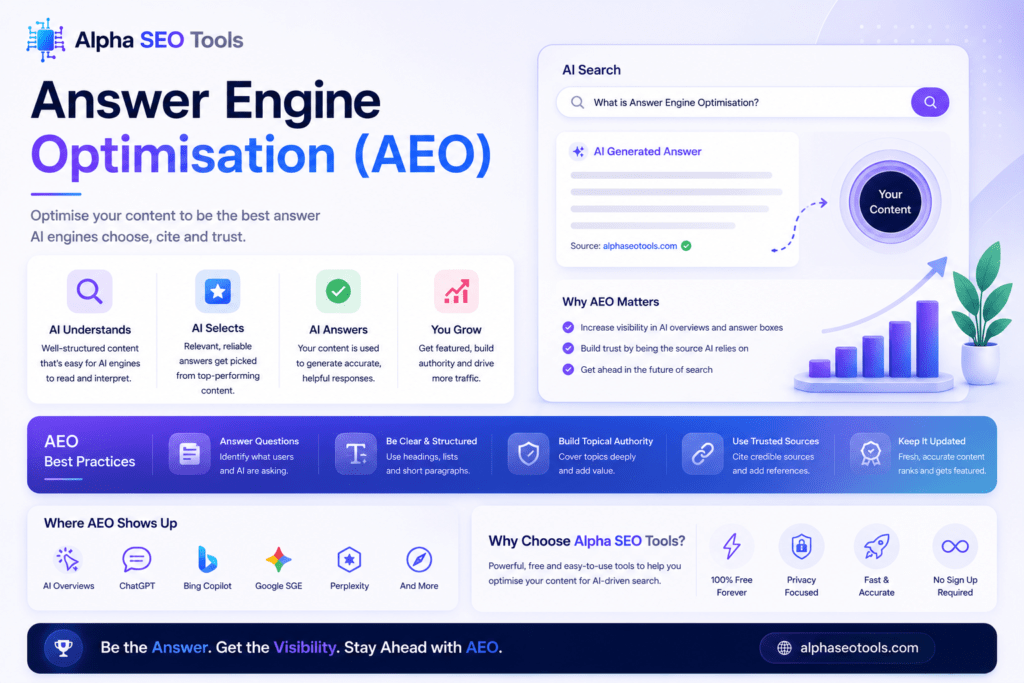
| Answer Engine Optimization Action | Impact Level | Why It Matters |
| Answer-first content blocks | High impact | Open every section with a direct 40-60 word answer before expanding into detail |
| FAQPage schema markup | High impact | FAQPage schema pages appear in Google AI Overviews 3.2x more often than unstructured pages |
| Article schema with author | High impact | Author attribution with visible bio and credentials is a primary E-E-A-T trust signal |
| Organisation schema + sameAs | High impact | Links your brand entity to authoritative profiles across the web for entity clarity |
| Question-mirroring H2/H3s | High impact | Headings should match real conversational queries: how, what, why, when formats |
| Content freshness cycle | Medium impact | Tier 1 pages updated every 90 days with new data, refreshed schema, updated stats |
| Internal topic cluster linking | Medium impact | Build content clusters around core themes so AI recognises topical authority |
| Concise paragraph structure | Medium impact | Short focused paragraphs of 2-4 sentences are easier for AI systems to extract accurately |
| BreadcrumbList schema | Medium impact | Reinforces site structure and page relationships for both Googlebot and AI systems |
| Avoid HowTo rich result markup | Note | Google removed HowTo rich results May 2026. Retain step structure for AEO but skip the markup |
Two items worth highlighting from that table. First, Google officially removed HowTo rich results from both desktop and mobile as of May 2026. You should retain step-based content structure for AEO clarity, but do not include HowTo schema markup expecting it to produce rich cards. It will not. Second, FAQPage schema has the highest confirmed citation rate of any structured data type for AI answers, but it works because of the quality of the Q&A content beneath it, not the markup alone. Weak questions with vague answers will not earn citations regardless of how the schema is implemented.
How Answer Engine Optimization Grows and Scales Your Business
The business case for AI citation strategy is no longer theoretical. The Conductor AEO and GEO Benchmark Report, which analysed 13,770 enterprise domains and over 100 million citations from 17 million AI-generated responses between May and September 2025, found that AI referral traffic accounts for 1.08 percent of total website traffic across industries, with the IT sector already at 2.8 percent and growing. Those numbers will look small until you factor in what that traffic actually does.
Visitors who arrive via AI citations convert at 4.4 times the rate of standard organic visitors and spend 68 percent more time on site. They are further along in their research process, more specific in their intent, and more receptive to whatever the page offers. A brand cited in AI answers for the questions its potential customers are asking is not just gaining traffic. It is gaining qualified attention from people who are already partially convinced.
The compounding effect matters too. NerdWallet’s documented experience is instructive: a 20 percent decrease in site traffic accompanied by a 35 percent growth in revenue, driven by consistent presence in AI answers and featured snippets. The volume went down. The quality went up. Answer Engine Optimization shifts the optimization target from maximum visits to maximum relevance. For most businesses, that shift improves commercial outcomes even as total traffic declines.
For B2B organisations, the impact is particularly direct. Research from Genesys Growth’s 2026 AEO analysis found that B2B companies using AEO strategies see up to a 37 percent increase in qualified leads compared to traditional SEO alone. Over 67 percent of B2B decision-makers now begin their buying journey with question-based searches through AI assistants rather than traditional search engines. If your content is not structured for this strategy, you are invisible at the moment when those decision-makers are forming their views.
How to Measure Whether Your AEO Strategy Is Working
Traditional SEO metrics do not capture Answer Engine Optimization performance. Position one means less when AI Overviews are present. Click-through rates go down even when visibility goes up. Measuring AEO requires a different set of signals.
- AI Share of Voice is the percentage of relevant AI-generated answers that mention your brand or cite your content. This is the primary Answer Engine Optimization performance metric. Track it across Google AI Mode, Perplexity, and ChatGPT Browse separately, as citation patterns differ between platforms.
- Citation rate is the share of answers for your target queries that include a link or attribution to your domain. A rising citation rate is the direct signal that your structural and authority improvements are working.
- Branded query lift measures whether AI citations are increasing the volume of direct brand searches. Users who see your brand cited in an AI answer frequently search for you directly afterward, creating a measurable branded traffic signal.
- Time to first citation tracks how quickly a new or refreshed page earns its first AI citation after publishing. Shortening this cycle is an indicator that your content structure and schema implementation are functioning correctly.
For monitoring how your pages appear and present across search and AI surfaces before publishing, Alpha’s SEO Metadata Tracker shows how titles, descriptions, and social previews render in real time, ensuring the on-page signals that AI systems use for attribution are accurate before content goes live. The Google SERP Preview Tool confirms how meta information appears in standard search results as a baseline quality check.
Platform-Specific Optimisation: Google, Perplexity, and ChatGPT
Google AI Mode and AI Overviews
Google’s AI Mode, which launched in 2025 and is expanding rapidly, provides a fully conversational search experience powered by Gemini. It builds answers by pulling from multiple sources and synthesising them into a structured response. Schema markup that defines what a page is about, who authored it, and what claims it makes functions as a structured input into that synthesis process. Pages with well-implemented schema are more likely to be cited in AI Mode answers than pages with identical content but no structured data, per the confirmed findings from Google I/O 2026 analysis at schemaninja.com.
Perplexity
Perplexity’s citation algorithm rewards three specific signals for answer engine optimization above others: content clarity, recency, and the presence of external citations within the content itself. Perplexity is more likely to cite a page that itself cites credible external sources, because the citation chain acts as a quality signal. This means that for Perplexity optimization specifically, including properly linked references to authoritative external sources within your content is a meaningful citation-rate lever, not just a trust signal for human readers.
ChatGPT Browse
ChatGPT’s browsing behaviour is less predictable than Google or Perplexity and relies more heavily on the overall authority and entity clarity of a domain than on page-level structural signals. The most reliable path to ChatGPT citation is building genuine topical authority, consistent entity representation across the web, and content that provides unique, experience-backed insights that aggregate sources cannot replicate. ChatGPT confirmed its use of structured data for product results in May 2025, making Product and Offer schema a worthwhile investment for e-commerce and service businesses targeting AI shopping recommendations.
Answers to What Businesses Are Asking About AEO Right Now (FAQ’s)
Does answer engine optimization replace SEO?
No. Answer engine optimization is built on the same foundation as traditional SEO and cannot function without it. Technical hygiene, content quality, domain authority, and backlink profile all remain essential because AI systems use the same eligibility signals as traditional search for determining which sources to draw from. What AEO adds is a content and structural layer: answer-first formatting, schema markup, entity clarity, and E-E-A-T demonstration. Together these determine whether a well-optimized page earns citations or remains invisible in AI-generated responses. Google’s own 2026 guidance states explicitly that AEO is still SEO.
How long does it take to start appearing in AI answers?
Time to first citation varies by domain authority, content quality, and how competitive your topic area is. For established domains with strong existing SEO foundations, implementing structured content blocks and schema markup on well-trafficked pages can produce measurable citation improvements within four to eight weeks. For newer domains building authority from scratch, the timeline is longer because the underlying trust signals take time to accumulate. Monitoring citation rate against specific target queries is the most reliable way to track progress in the early stages of an answer engine optimization programme.
Is schema markup essential for AEO?
Schema is not technically required. Google confirms that no special markup is needed for AI feature eligibility. In practice, pages with appropriate schema markup earn AI citations at a consistently higher rate than identical pages without it. FAQ Page schema is the highest-impact type for answer engine optimization, with a documented 3.2x citation rate advantage. The practical recommendation is to implement Organization, Article, and FAQ Page schema as a minimum baseline, and extend to Product, Local Business, or Person schema based on your business type. Validate all schema regularly against Google’s Rich Results Test and remove any deprecated types.
What is the difference between AEO and GEO?
Answer engine optimization focuses specifically on the answer-retrieval layer: ensuring your content is selected when an AI engine needs a source for a specific fact, definition, or recommendation. Generative Engine Optimization is the broader discipline covering all strategies for improving how a brand is understood, represented, and cited across generative AI platforms, including brand entity management, cross-platform authority building, and AI Share of Voice tracking across multiple systems. AEO is a component of GEO, and both disciplines share the same foundational requirements: strong content, verified authority, and structured data implementation.
Alpha SEO Tools That Support Your AEO Workflow
This type of AEO work is not a standalone project. It is a layer added to your existing content and SEO workflow. These Alpha tools connect directly to the practical steps in this guide.
- The SEO Keywords Finder Tool surfaces the conversational queries that should be shaping your answer-first content structure. Real-world question phrasing from your target audience is the raw material for both your H2 and H3 headings and your FAQPage schema content.
- The Keyword Density Analyzer ensures that the content you are optimising for AEO maintains the right semantic keyword balance. Over-optimised content triggers quality filters that reduce citation probability. This tool catches that issue before pages go live.
- The Google SERP Preview Tool is the baseline check that confirms your title tag and meta description are correctly calibrated before a page publishes. These metadata fields are what AI systems use for attribution when citing your content in generated answers.
- The SEO Metadata Tracker audits live page metadata and social preview data in one view, making it the right tool for the freshness-cycle review that Tier 1 AEO pages require every 90 days.
- The URL Slug Generator ensures every page in your content cluster goes live with a clean, keyword-accurate URL, a basic signal of content relevance that both AI systems and Googlebot use when evaluating whether a page is an authoritative source on its stated topic.
The Window is Open. It Will Not Stay That Way.
The search landscape shifted before most businesses noticed. The brands that are earning consistent citations in AI answers right now are not there because of luck or because they have bigger budgets. They are there because they understood the power of AEO and answer engine optimization rewards structure, authority, and genuine expertise, and they built those things into their content before the majority of their competitors started paying attention.
The 20 percent adoption figure from Acquia is the most important number in this article. Only one in five organisations has begun implementing the strategies covered here, despite 70 percent acknowledging the strategic impact. That gap represents a first-mover advantage that closes as awareness grows. The businesses that move now inherit a citation position that becomes progressively harder to displace as the AI systems accumulate more evidence of their authority.
Start with the content you already have. Identify your most important pages. Restructure them with answer-first blocks, question-mirroring headings, and FAQPage schema. Build your Organisation and Article schema stack. Refresh your highest-value pages on a 90-day cycle. Measure citation rate, not just clicks.
The answer your audience is looking for already exists somewhere. Make sure it comes from you.
Sources and Further Reading
All statistics and platform behaviour described in this article are sourced from confirmed, published research. Key sources include: Google Search Central AI features guidance (2026), the Search Engine Journal analysis of Google’s May 2026 AI Search guide, Ahrefs’ December 2025 study of AI Overview CTR impact across 300,000 keywords, Frase’s mid-2025 AI citation data showing 527 percent year-over-year growth in AI-referred sessions, the Conductor AEO and GEO Benchmark Report covering 13,770 enterprise domains and 17 million AI responses from May to September 2025, Google I/O 2026 structured data analysis from schemaninja.com and digitalapplied.com, and SearchAtlas’s schema-for-AEO research documenting FAQPage citation rate advantages. Schema.org v30.0 specification data is sourced from the canonical schema.org documentation.
For Google’s official position on what is and is not necessary for AI feature eligibility, the authoritative source is Google Search Central’s structured data documentation, updated regularly and the correct reference for any schema implementation decision. For AEO performance measurement frameworks and AI Share of Voice tracking methodology, the Conductor and HubSpot AEO research cited in this article represent the most rigorous current approaches.
alphaseotools.com | Article: Answer Engine Optimization 2026 Guide | Sources: Google Search Central, Ahrefs, Frase, Conductor, SearchAtlas, Genesys Growth, SEJ