

Table of Contents
The search landscape has fundamentally shifted. Type a question into Google today, and more often than not, the answer appears directly on the results page—no click required. A weather forecast, a currency conversion, a step-by-step recipe, a definition, a “People Also Ask” accordion. These are zero-click searches, and they now account for a significant portion of all queries.
For marketers and content creators, this represents both an existential threat and an unprecedented opportunity. The traditional model of attracting clicks to a website is being eroded by Google’s insatiable appetite for keeping users on the SERP. Yet, those who master a deliberate zero click search strategy position their brands as the ultimate authorities, capturing attention, building trust, and driving value even without a traditional website visit. This guide provides a comprehensive, updated framework for building a zero click search strategy that wins featured snippets, dominates SERP features, populates answer boxes, and turns People Also Ask into your personal content distribution network.
Old Days SEO
Gone are the days when a simple meta description tweak was enough. Modern zero click search strategy demands a deep understanding of how Google extracts, structures, and presents information. It requires precise content formatting, ironclad semantic HTML, strategic schema implementation, and a relentless focus on becoming the single best answer to every question your audience asks. Whether you call it answer engine optimization (AEO) or simply smart SEO, the core principle remains: if Google is going to answer a query without a click, make sure it’s your brand’s answer that appears. Throughout this article, we’ll explore every facet of a winning zero click search strategy, from the technical underpinnings of featured snippets to the psychological impact of appearing in direct answers. By the end, you will have a step-by-step blueprint to turn zero-click searches from a traffic leak into a powerful brand-building engine.
Table 1: The Evolution of Search – From Clicks to Answers
| Era | Time Period | Dominant Feature | User Behavior | SEO Strategy |
| Blue Links Era | 1998–2012 | Ten blue links, meta descriptions | Scan and click | Keyword density, backlink volume |
| SERP Feature Emergence | 2012–2019 | Knowledge Graph, featured snippets, images | Quick scan, some zero-click | Structured data, entity optimization |
| Zero-Click Dominance | 2019–2024 | Featured snippets, PAA, answer boxes, direct answers | Get answer without leaving SERP | Zero click search strategy, AEO, content structuring |
| AI and Generative Search | 2024–present | AI Overviews, multimodal results, conversational | Engaged with AI summary, deeper query refinement | Generative engine optimization, entity-rich content, multimedia |
Understanding this evolution is crucial to appreciating why a zero click search strategy is no longer optional. It’s the natural progression of Google’s mission to organize the world’s information and make it universally accessible and useful.
What Exactly Is a Zero Click Search Strategy?
A zero click search strategy is a holistic content and technical SEO approach designed to secure visibility in SERP features that answer user queries directly on the results page, without requiring a click to an external website. These features include featured snippets, answer boxes, knowledge panels, People Also Ask (PAA) boxes, direct answers, and increasingly, AI-powered overviews.
The goal of a zero click search strategy isn’t to lament the loss of website clicks; it’s to capture attention and authority within the SERP itself, turning your brand into the trusted source Google quotes. When a user sees your content repeatedly in featured snippets and PAA boxes, their mental association with your brand as the definitive answer engine grows. That trust translates into branded searches, higher click-through on the occasions they do click, and ultimately, conversions that outlast any single visit.
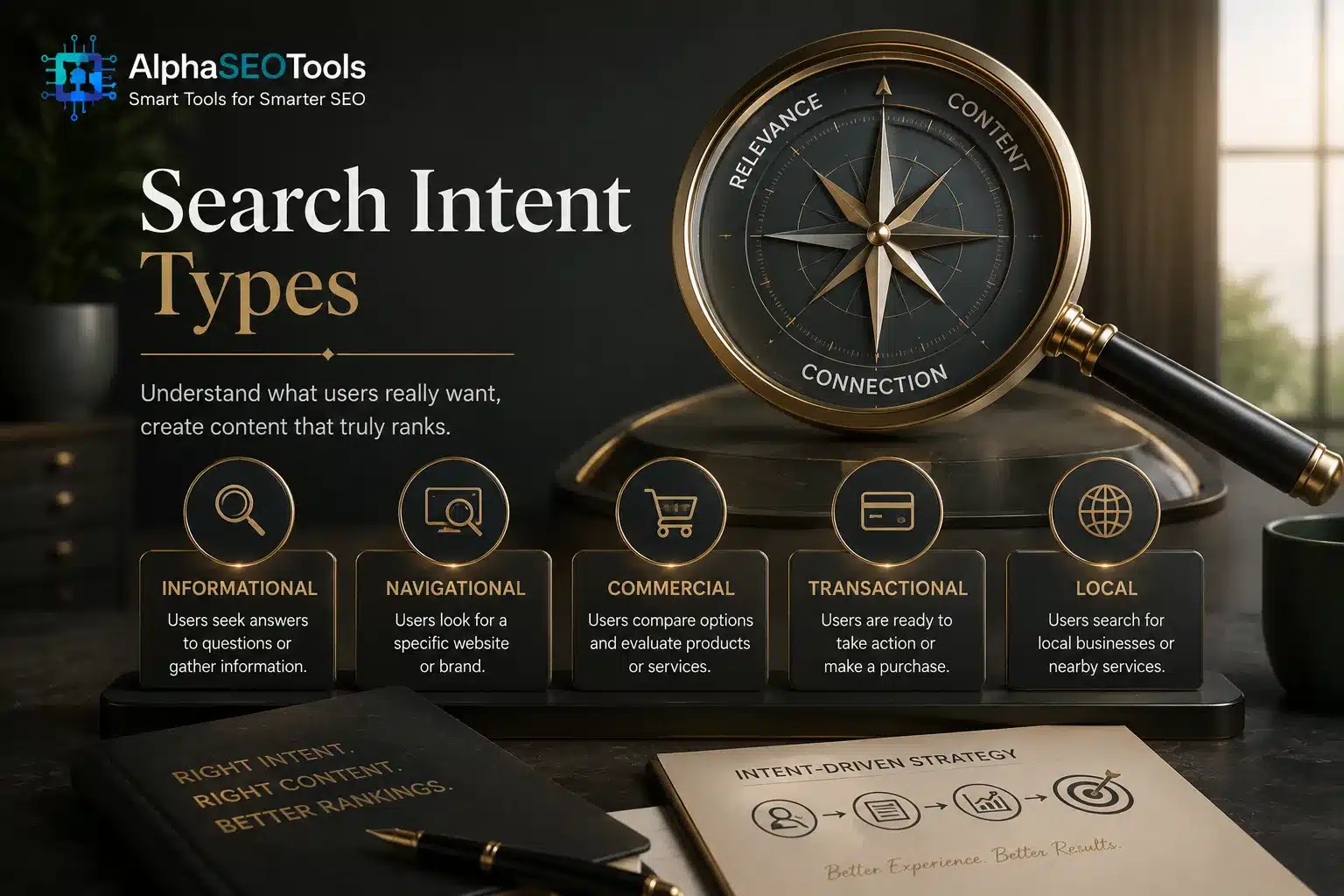
Importantly, a robust zero click search strategy doesn’t mean abandoning click-based goals. It means understanding the intent behind a query. Informational queries where users want a quick fact are ideal zero-click targets. Commercial investigation queries, where users compare products, can leverage star ratings and review snippets within the SERP to pre-sell before a click. Transactional queries still demand a landing page. A smart zero click search strategy segments keywords by intent and assigns SERP feature ownership as the primary objective for informational and top-of-funnel terms. This dual approach ensures you capture mindshare at every stage of the buyer journey.
The Drivers Behind the Zero-Click Phenomenon
Why has zero-click search become so prevalent?
- Mobile Usage: On small screens, scrolling through a featured snippet and getting an immediate answer is far more user-friendly than pinching and zooming on a mobile website.
- Voice Assistants: Google Assistant and Alexa rely entirely on providing a single spoken answer, almost always drawn from a featured snippet or a direct answer. If your content doesn’t hold that position, your brand is invisible on voice search.
- Knowledge Graph Maturity: Google’s ability to understand entities and their attributes has improved, allowing the engine to display them without citing a source.
- Business Model: Google benefits from keeping users engaged on its properties. The more queries it resolves natively, the more searches users perform, and the more ad impressions Google serves.
For brands, the countermove isn’t to fight this trend but to master it with a sophisticated zero click search strategy.
Another critical driver is the explosion of structured data adoption. As more websites implemented schema markup, Google’s ability to parse and present direct answers improved dramatically. The engine no longer had to guess; it could extract precise answers from well-marked content. This symbiotic relationship between structured data and a zero click search strategy means that technical SEO is no longer separate from content—it’s the delivery mechanism.
Featured Snippets: The Keystone of Zero Click Visibility
Featured snippets are the highlighted text boxes that appear at the top of Google’s search results, often called “position zero.” They directly answer a user’s query with an excerpt pulled from a webpage, along with the page title and URL. Securing a featured snippet is the cornerstone of any zero click search strategy because it gives your brand the most prominent real estate on the SERP, often above the first organic result.
Google extracts featured snippets in various formats: paragraphs, lists (numbered or bulleted), tables, and even videos. The format you target should mirror the query intent:
- “How to tie a tie” demands a step-by-step numbered list snippet.
- “What is content marketing” works best as a concise paragraph definition snippet.
- “iPhone vs Samsung specs” is ideal for a table snippet.
To optimize for featured snippets, you must structure your content with surgical precision. The “inverted pyramid” method works effectively: place the most concise, direct answer to the query in a short standalone paragraph or list immediately after your H2 or H3 heading. For a definitional query, aim for a 40–60 word clear statement that Google can lift verbatim. Follow that with deeper, more nuanced explanation. Google’s BERT and MUM algorithms understand context, so surrounding the target answer with semantically rich supporting content increases the confidence score for extraction. Additionally, using question-based headings (H2, H3) that mirror the exact search query signals alignment.
Table 2: Featured Snippet Types and Optimization Tactics
| Snippet Type | Best For | Content Formatting | Example Query |
| Paragraph | Definitions, short answers | 40–60 word concise answer directly under heading, followed by details | “What is zero click search strategy” |
| Numbered List | Step-by-step guides, processes | Sequential H2 or H3 for each step, clear numbering, instructive language | “How to implement a zero click search strategy” |
| Bulleted List | Unordered lists, features, types | Bullet points under a heading that states the list topic clearly | “Benefits of a zero click search strategy” |
| Table | Comparisons, specifications | HTML table with clear headers, no colspan/rowspan complexity | “Zero click search strategy vs traditional SEO” |
| Video | Demonstrations, tutorials | YouTube video with timestamp chapters, descriptive title and description | “Zero click search strategy tutorial” |
People Also Ask (PAA): Infinite Opportunities for Answer Ownership
The People Also Ask box is a dynamic accordion of related questions that appears on most SERPs. Each click expands a PAA question to reveal a short answer excerpt, along with a link to the source. For a zero click search strategy, PAA is a goldmine. It appears on almost every results page, often multiple times, and provides additional entry points for your content. Unlike featured snippets, PAA answers can come from pages that don’t hold position zero, giving newer or lower-ranked pages a chance to appear. Moreover, PAA questions are generated algorithmically based on real user behavior, making them a direct window into the questions your audience is asking.
To conquer PAA, create dedicated FAQ sections within your articles. But don’t just stuff random questions at the bottom. Use tools like AlsoAsked.com, AnswerThePublic, and Google’s own PAA scraping to build a question map. Structure each PAA answer with the same precision as a featured snippet: a clear, concise answer (40–60 words) directly under a question heading, ideally in H3, with further elaboration below. Implement FAQ schema on the page, which explicitly tells Google that these are question-and-answer pairs.
Answer Boxes, Direct Answers, and Knowledge Panels: Different Flavors of Instant Information
While often used interchangeably, these SERP features have subtle distinctions:
- Answer Box: A short, factual answer displayed at the top of the SERP without a link to a source. These are often calculated data points like “current time in London” or “square root of 144.”
- Direct Answers: Similar to answer boxes but frequently pull from a Knowledge Graph entity and cite a source, like a dictionary definition.
- Knowledge Panels: Appear as a large box on the right side (desktop) or top (mobile) and consolidate entity information from multiple sources.
A comprehensive zero click search strategy addresses all three. For answer boxes and direct answers, the key is structured data—particularly Organization, Person, Event, and Product schemas—that feed the Knowledge Graph directly. For knowledge panels, you need an established entity presence: a verified Google Business Profile, a Wikidata entry, Wikipedia mentions if possible, and consistent structured data across the web.
The Synergy Between Structured Data and Zero Click Search Strategy
Structured data, implemented via Schema.org, is the language search engines use to understand content at an entity level. For a zero click search strategy, structured data is not a ranking factor in the traditional sense but a prerequisite for eligibility in many SERP features.
- FAQ schema enables PAA rich results.
- HowTo schema can trigger visual step-by-step instructions directly in the SERP.
- Product schema with aggregate ratings populates star review snippets.
- Article schema helps Google understand headline, author, and publication date for Top Stories carousels.
Implementing structured data has become easier with tools like Google’s Structured Data Markup Helper, Rank Math, Yoast SEO, and custom JSON-LD generators. A zero click search strategy should audit all target pages for structured data completeness.
Internal and External Linking: Building Topical Authority for SERP Features
A zero click search strategy isn’t built on isolated pages; it requires a network of interlinked content that signals topical depth.
Internal linking connects your pillar page on zero click search strategy with cluster pages on specific subtopics like featured snippets optimization, PAA strategy, and structured data implementation. Use descriptive anchor text that mirrors the target query of the destination page. When your domain is recognized as an authority on a broad topic, individual pages have a higher chance of being pulled into PAA and featured snippets.
External links to reputable, authoritative sources also play a role. Citing studies from SparkToro, Semrush, Ahrefs, or Google’s own patents and documentation signals to search engines that your content is well-researched and trustworthy.
Optimizing for Voice Search and AEO Within a Zero Click Strategy
Voice search is almost entirely a zero-click experience. When a user asks their smart speaker a question, the device reads back a single answer—almost always pulled from a featured snippet or a direct answer. Therefore, a zero click search strategy that captures featured snippets inherently captures voice search results.
However, there are nuances. Voice queries tend to be longer, more conversational, and often phrased as full questions. Content optimized for voice should include natural language questions as headings, with succinct spoken-word answers. Think of how you would answer someone in a conversation. This is the essence of answer engine optimization (AEO), which dovetails perfectly with a zero click search strategy.
Generative AI, SGE, and the Future of Zero Click Search Strategy
Google’s Search Generative Experience (SGE) and AI Overviews are the latest frontier. These features use generative AI to synthesize answers from multiple web sources and present them in an even more prominent SERP block, complete with links and follow-up questions.
To future-proof your zero click search strategy, focus on producing comprehensive, original research that AI models will deem valuable. Include unique data, expert quotes, and proprietary insights that can’t be easily replicated. As AI-generated answers become more prevalent, the sources they cite will become the new position zero. Furthermore, optimize for visual and multimodal zero-click features. Image packs, video carousels, and even TikTok or YouTube shorts appear in SERP features.
Measuring Success: Rethinking Metrics for Zero Click
One of the most challenging aspects of a zero click search strategy is measuring its effectiveness. Traditional metrics like clicks and sessions may decrease while impressions, brand awareness, and revenue actually grow. It’s essential to adopt new KPIs.
Table 3: Key Metrics for a Zero Click Search Strategy
| Metric | What It Measures | Tool |
| Featured Snippet Count | Number of queries where your URL holds position zero | Semrush, Ahrefs, STAT |
| PAA Appearances | Frequency of your URL in People Also Ask boxes | ZipTie, AlsoAsked, manual tracking |
| Branded Search Volume | Increase in searches for your brand name | Google Trends, GSC, Keyword Planner |
| Impressions for Zero-Click Queries | High-impression, low-CTR keywords in GSC | Google Search Console |
| Voice Search Referrals | Users finding you via voice assistant (hard to track) | Google Business Profile insights, brand lift studies |
| Rich Result Impressions | Performance of FAQ, HowTo, and other structured data-driven appearances | GSC Performance report under “Search Appearance” |
Common Mistakes in Zero Click Search Strategy and How to Avoid Them
- Targeting the wrong keywords: Trying to force a product page into a featured snippet for a purely informational query frustrates users and rarely works.
- Neglecting mobile optimization: Since the majority of zero-click searches happen on mobile, slow-loading pages or poor mobile usability will disqualify you.
- Over-optimization at the expense of UX: If your content reads like a robotic answer engine devoid of depth, users who do click will bounce. Offer the “what” in the snippet and the “why” and “how” beyond it.
- Implementing structured data incorrectly: Always test your structured data with Google’s Rich Results Test tool before and after publishing.
- Ignoring the branding opportunity: If your brand name is not recognizable, a featured snippet might give the answer away without building any brand equity. Invest in brand building.
Practical Implementation Checklist for a Winning Zero Click Search Strategy
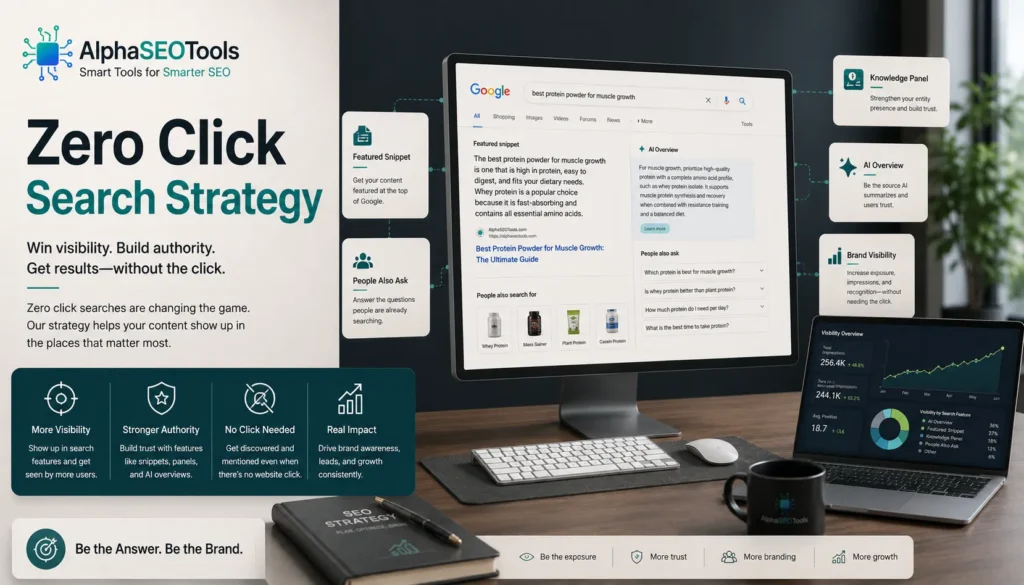
To put everything together, a systematic approach is essential. Below is a practical, step-by-step implementation checklist you can use to audit your existing content and guide new content creation.
Step 1: Keyword and Intent Research
- Identify informational, question-based queries relevant to your niche.
- Map each keyword to its dominant SERP feature (featured snippet, PAA, knowledge panel).
- Prioritize keywords where you already rank on page one (positions 2–10) but could snag the snippet.
Step 2: Content Structuring and Formatting
- Use question-based H2 and H3 headings that match target queries.
- Place a concise, 40–60 word answer immediately after the heading.
- For list snippets, use actual numbered or bulleted HTML lists, not plain text dashes.
- For table snippets, build clean HTML tables with clear headers.
- Expand with comprehensive, semantically rich content below the snippet bait.
Step 3: Implement Relevant Structured Data
- Add FAQ schema for pages answering multiple questions, including PAA targets.
- Use HowTo schema for step-by-step guides.
- Apply Article schema with about and mentions properties linking to entities.
- Test with Rich Results Test and fix errors.
Step 4: Internal and External Linking
- Link from your pillar page on zero click search strategy to all related cluster content.
- Use descriptive anchor text that reinforces topic signals.
- Cite authoritative external sources to boost trustworthiness.
Step 5: Technical and Mobile Optimization
- Ensure pages load fast on mobile (Core Web Vitals).
- Use a responsive design and avoid intrusive interstitials.
- Make font sizes readable and touch targets accessible.
Step 6: Multimedia and Visual Assets
- Create custom images, videos, and infographics with descriptive alt text.
- Host videos on YouTube and embed them with schema markup.
- Optimize thumbnails for video carousels.
Step 7: Monitor, Measure, and Iterate
- Track featured snippet and PAA ownership weekly.
- Analyze GSC performance for zero-click queries.
- Refresh content regularly to maintain snippet positions.
The Human Element: Why Zero Click Isn’t the Enemy
Amidst all the technical talk, it’s worth remembering that zero-click searches exist because they serve human needs. Someone standing in a kitchen asking their smart display for a recipe conversion doesn’t want to scroll a blog post. A commuter asking about their flight status needs immediate information. If your brand can be the reliable source in these micro-moments, you build a relationship that transcends clicks. A zero click search strategy, executed with empathy and precision, positions your brand as a helpful assistant rather than a traffic-hungry publisher.
Frequently Asked Questions (FAQ’s)
What is a zero click search strategy?
A zero click search strategy is an SEO approach that aims to secure your content in SERP features like featured snippets, PAA boxes, and direct answers, where the user gets the information they need without clicking through to a website.
Why are zero click searches important for SEO?
They represent the majority of mobile and voice search results, offering huge brand exposure even without clicks. Winning these features builds trust and authority, driving branded searches and long-term traffic.
How do you optimize for featured snippets?
Structure content with clear question headings, provide a concise 40–60 word answer immediately after, and use proper HTML lists or tables. Implement relevant schema and ensure mobile-friendliness.
What role does structured data play in a zero click search strategy?
Structured data helps search engines understand your content explicitly, making it eligible for rich results like FAQ accordions, HowTo steps, and knowledge panels that dominate zero-click real estate.
Can zero click searches still drive traffic?
Yes, because appearing in snippets and PAA increases brand recognition, leading to more branded searches and higher click-through on other content. Also, snippets include a link, and curious users often click for deeper information.
What is the difference between a featured snippet and an answer box?
A featured snippet always includes a source link and an excerpt. An answer box may provide a direct computational or Knowledge Graph answer without necessarily citing a webpage, often for factual queries like time or calculations.
How does People Also Ask help with a zero click search strategy?
PAA allows your content to appear for multiple related questions on a single SERP, increasing visibility. Optimizing for PAA involves creating FAQ sections with concise answers and FAQ schema.
Does voice search use zero click search strategy?
Absolutely. Voice assistants read back a single answer, usually from a featured snippet or direct answer. Capturing these positions is the only way to be the spoken answer on smart speakers.
Conclusion
The era of counting clicks as the sole measure of search success is over. Zero-click searches are not a passing trend; they are the new normal, driven by mobile behavior, voice assistants, and Google’s evolving AI. A robust zero click search strategy repositions your brand as the answer provider, capturing prime SERP real estate through featured snippets, People Also Ask boxes, answer boxes, and direct answers. It requires a blend of precise content structuring, impeccable technical SEO, strategic schema markup, and a deep understanding of user intent. By following the frameworks, tables, and checklists laid out in this guide, you can transform your content library from a collection of webpages into a powerful answer engine that dominates the zero-click landscape.