
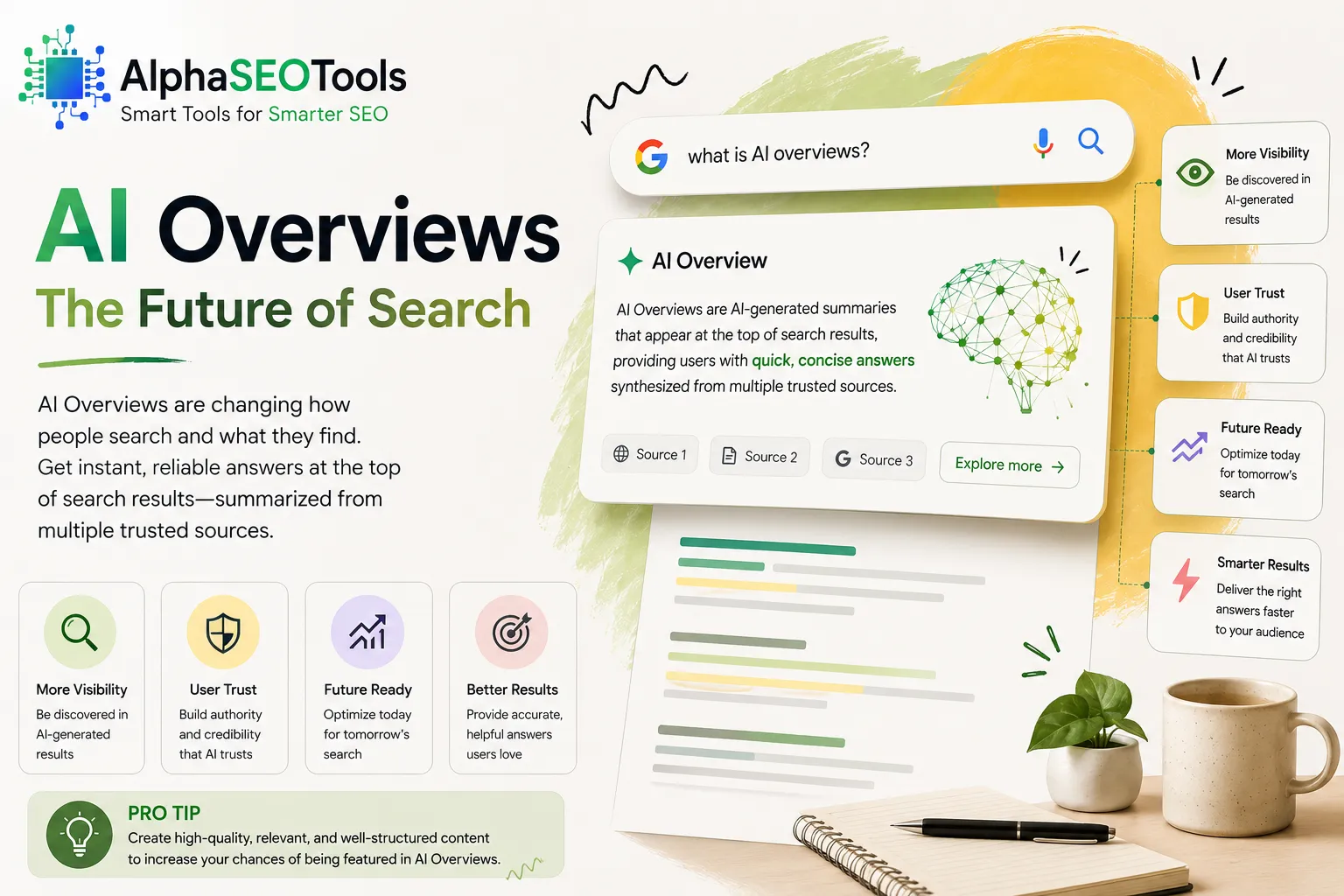
alphaseotools.com | Admin: Alpha SEO Tools
You refresh the page. Nothing changes. You check your rankings—still sitting pretty on page one, position three, maybe even position one. But the traffic? It’s bleeding out like a slow leak you can’t quite find. Your content is better than ever. Your optimization is flawless. Yet somehow, the visitors just aren’t showing up the way they used to.
Here’s the uncomfortable truth that most SEOs are terrified to admit: ranking doesn’t mean what it used to. Not in 2026. Not anymore. The old playbook—rank high, collect clicks, cash checks—is officially dead and buried. What killed it wasn’t a single algorithm update or a sudden policy change. It was something far more insidious: the rise of generative engine optimisation and Google’s relentless push to keep users on their platform.
Your beautifully optimized page can sit at the top of the search results and still generate absolutely nothing. No clicks. No traffic. No revenue. That’s the cruel irony of the AI era, and it’s happening to thousands of websites right now without them even realizing it. They’re still celebrating their rankings while their traffic silently evaporates into the ether.
The Numbers Are Brutal. Let’s Start There.
I’m not going to sugarcoat this situation because the data is honestly terrifying for anyone who depends on organic traffic. When an AI Overview shows up on a search results page, users click on traditional organic links only 8% of the time. Compare that to 15% when no AI summary appears, and you’re looking at nearly a 50% drop in click-through rates just because Google decided to summarize your content for the user. Your beautifully crafted page sits there, ranking high, yet completely invisible to the people who need it most. It’s like owning a storefront on the busiest street in town, but everyone who walks by only looks at the billboard across the street and never actually comes inside.
But wait, because it actually gets worse. A comprehensive 2026 analysis from Seer Interactive found that organic click-through rates drop by a staggering 61% for queries where an AI Overview appears—from 1.76% down to a dismal 0.61%. The zero-click rate jumped from 56% to 69% after the AI Overview rollout, meaning more than two-thirds of searches now end without anyone ever leaving Google’s results page. Here’s another gut punch: 60% of all Google searches now end without a single click whatsoever. In AI Mode, Google’s experimental search interface that’s been expanding throughout 2026, that number hits a mind-numbing 93%. Nine out of ten searches in AI Mode produce absolutely zero clicks, zero traffic, zero visitors, and zero conversions.
Your page can be the absolute best resource on the internet for a given query and still receive nothing because Google’s AI decided to give away all your answers for free. You can do everything right—optimize perfectly, write brilliantly, structure beautifully—and still get nothing in return. Zero clicks. Zero visits. Zero revenue. And the worst part? Most website owners don’t even realize this is happening to them because they’re still looking at rankings instead of actual traffic. They see their position holding steady and assume everything is fine, while their traffic silently bleeds away day after day.
The Big Lie About Featured Snippets
Remember when featured snippets were the holy grail of SEO? You’d optimize religiously for that coveted position zero, watch your page get that beautiful box at the top of the results, and then sit back as the traffic poured in like clockwork. It was the SEO equivalent of winning the lottery—one snippet, thousands of visitors, pure magic. Featured snippets are still around, but they’re not the main event anymore. AI Overviews have completely taken over, and they’re bigger, smarter, and way more dangerous to your traffic than any snippet ever was.
Here’s the fundamental difference that most people miss: a featured snippet pulls one passage from one single page and displays it prominently. Simple, straightforward, and relatively fair. You write good content, you get the box, you get the traffic. An AI Overview, on the other hand, synthesizes information from multiple sources into a completely new, original answer that often doesn’t directly quote anyone. It’s not citing you—it’s remixing you. And more often than not, it’s giving away your best, most valuable insights without sending a single visitor your way.
Think of it like this: a featured snippet is a billboard with your name on it, visible to everyone who drives by. An AI Overview is a cocktail party where someone else is telling your stories, getting all the credit, and you weren’t even invited to the party. Google’s AI Overviews now appear on roughly 48% of all queries, which is a massive jump from just 13% back in March 2025. The growth has been exponential and frankly almost terrifying for anyone whose business depends on organic traffic. Question-based queries are particularly vulnerable, triggering AI Overviews 86% of the time. Comparison queries? Those get hit with AI Overviews a staggering 95% of the time. Think about that for a moment. If you’re writing “how to” content, “best X versus Y” comparisons, or answering any kind of “why” questions, you’re swimming in AI Overview territory with sharks circling beneath the surface.
The “Two Googles” Problem
Here’s something that will genuinely blow your mind and probably keep you up at night if you’re serious about SEO. A June-July 2026 study from DerivateX analyzed 1,259 AI Overview citations against 1,000 organic search results, and the findings were absolutely stunning. Only 35% of the sources cited in AI Overviews actually rank in Google’s own top 10 organic results. That means 65% of the pages Google’s AI chooses to cite aren’t even visible in the regular search results. They’re invisible to traditional Google but somehow, magically, visible to the AI system. Your page can rank number one and still be completely invisible to Google’s AI. You can dominate the SERPs and be completely absent from the summaries that users actually see.
The two systems—traditional search ranking and AI citation—operate almost entirely independently now. The overlap between what ranks and what gets cited fell from about 76% in July 2025 to roughly 38% by March 2026. That’s a drop of nearly 50% in less than a year. Ranking and citation have split apart completely. They’re now two entirely different games, two entirely different worlds, two entirely different Googles. And if you’re still playing the old game, you’re already losing without even knowing it. The pages that get cited are often not the ones that rank highest, and the pages that rank highest are often not the ones that get cited. It’s a complete decoupling of the two systems.
AI Citation Sources: Where Google and Other Engines Look
To understand how to get cited, you need to understand where AI systems actually find their information. The AI search landscape isn’t one channel—ChatGPT, Perplexity, Gemini, and Google’s AI Overviews each pull from different sources with surprisingly little overlap. Here’s how the data breaks down in 2026:
| AI Engine | Top Cited Sources | Corpus Characteristics | Key Insight |
| Google AI Overviews & AI Mode | Wikipedia, YouTube, Reddit, .gov sources | User-generated content plus official sources | Government sources appear in 6% of AI-summary sources vs. 2% of standard results |
| ChatGPT | Wikipedia, Reddit, Forbes, LinkedIn | Encyclopedic; authoritative media | Wikipedia is among its most-cited sources; LinkedIn shows up at 14.3% for professional queries |
| Perplexity | Reddit, technical/expert sources, GitHub | Community-driven; technical; expert | Runs its own crawler rather than relying solely on another engine’s index |
| Gemini | Grounded in Google Search | Its own surface; low overlap with others | Behaves like its own distinct surface |
| Claude | Professional, data-heavy sources | Shows the lowest self-citation lift at 1.2x | Data gap—monitor directly |
The overlap between the sources two engines cite for the same topics ran as low as 16%. The engines disagree with Google, and they disagree with each other. A page one engine cites is often invisible to the others. This means you can’t just optimize for Google—you need to think about multiple AI systems simultaneously.
Why This Is Happening: Query Fan-Out
So why the massive disconnect between ranking and citation? It comes down to something called query fan-out, and it’s changing everything about how search actually works. Here’s how it operates. You type a question into Google like “How do I measure the ROI of content marketing?” Instead of running that one query and stopping like the old system would, Google’s AI—powered by Gemini 3 since January 2026—breaks it into a bunch of related sub-queries.
It simultaneously searches for “measure content marketing ROI,” “B2B content marketing metrics,” “content marketing value,” “prove content ROI to executives,” and “content program performance.” It runs all those searches at once, gathers the best information from each, and then stitches together the most complete answer from the pages that surface most consistently across the entire set of queries.
Your page might rank number one for the main query, but if it doesn’t show up in the fan-out results? If other pages provide more detailed, more specific information for those sub-queries? You’re completely out of the running. It’s like a basketball player who can score forty points but doesn’t play defense or rebound. The coach—in this case, Google’s AI—is looking at the whole game, not just the scoring column. That’s the fundamental shift that separates traditional ranking from AI citation, and it’s why you need to completely rethink your content strategy.
The Citation Gap Is Real
Want more proof that this isn’t just theoretical nonsense? Walker Sands conducted a massive analysis of 828 enterprise B2B companies across fourteen different industries, covering more than 45 million search queries. Here’s what they found: AI Overviews appear in 50% of search results where these B2B brands rank, which sounds promising until you look at the citation numbers. The median brand gets cited in just 3% of relevant AI Overviews. Three percent. That’s not a small gap—that’s a canyon.
Even more disturbing, 4.6% of enterprise B2B companies aren’t cited in AI Overviews for any of their relevant keywords whatsoever. The typical enterprise B2B company ranks for about 9,700 search queries, and AI Overviews appear in nearly half of them. Yet across all those thousands of opportunities, the median brand gets cited in just 3% of cases. That’s not a gap. That’s a Grand Canyon-sized chasm between ranking and recognition, and it’s only getting wider. The math simply doesn’t work in your favor if you’re relying on traditional ranking to drive traffic. You need to be cited, not just ranked.
The Good News: Citations Actually Convert Better
Okay, I’ve been pretty doom and gloom so far, but here’s the plot twist that might actually make you feel better. Traffic from AI Overview citations is actually better traffic. Much better. Brands that appear in AI Overviews receive 35% more clicks than those that don’t, and here’s the kicker: AI Overview traffic converts at 14.2% compared to just 2.8% for standard organic traffic. That’s almost five times better, which is a massive difference that completely changes the math on whether AI Overviews are good or bad for your business.
The bounce rate of traffic from AI Overview citations is 8% lower than traffic from regular organic results. People who click through from an AI summary are more engaged, more serious, and more likely to buy than regular search visitors. So yes, AI Overviews are stealing a lot of your clicks, but the clicks they do send your way are absolute gold. Think of it like this: traditional search traffic is a wide fishing net that catches a lot of fish, most of them small and not worth keeping. AI search traffic is a spear—you don’t catch as many, but the ones you get are the big ones worth keeping. The math changes completely when you realize that one AI citation can be worth five or even ten traditional clicks in terms of actual business value.
How to Actually Get Cited in AI Overviews
Alright, let’s get practical because theory doesn’t pay the bills. Here’s what actually works in 2026 for getting cited in AI Overviews, and I’m going to give you the real strategies, not the generic garbage you’ll find on most SEO blogs.
1. Build “Source of Record” Content
Google’s AI wants authoritative sources, period. E-E-A-T signals—Experience, Expertise, Authoritativeness, and Trustworthiness—matter more now than they ever have before. Content from credentialed authors on sites with strong editorial standards performs significantly better than generic, unattributed pages. A staggering 85% of AI Overview citations come from content published in the last two years, with 44% from 2025 alone. Freshness matters. Authority matters. Depth matters. Don’t just publish—publish with authority.
2. Structure Your Content for Extraction
AI Overviews don’t read like humans read. They extract key information, and if you don’t make it easy for them, they’ll extract from someone else. Here’s what the data shows works best:
- Content that provides a direct, concise definition in the first paragraph is cited 2.3 times more often as a leading source
- Pages with FAQ sections and structured Q&A format are cited 1.9 times more often
- Content with 2,000 words or more is cited three times more often
- Adding original data, statistics, or proprietary case studies increases your citation chances by a remarkable 156%
- Schema markup gives you a 2.1 times higher chance of being cited
- Strong internal linking structures with well-organized content silos see 34% more AI Overview citations
3. Make Every Section Independently Citable
Because of query fan-out, the AI might pull a passage from literally anywhere on your page—the middle, the bottom, a subheading you thought was minor. Every section needs to stand completely on its own with clear headings, direct answers, and standalone value. Think of your content as a buffet where the AI is picking and choosing individual dishes. Make sure every single dish is delicious on its own without requiring the full meal for context. This means each subheading should answer a complete question, each paragraph should contain a complete thought, and each section should provide value even if read in isolation.
4. Target the Right Queries
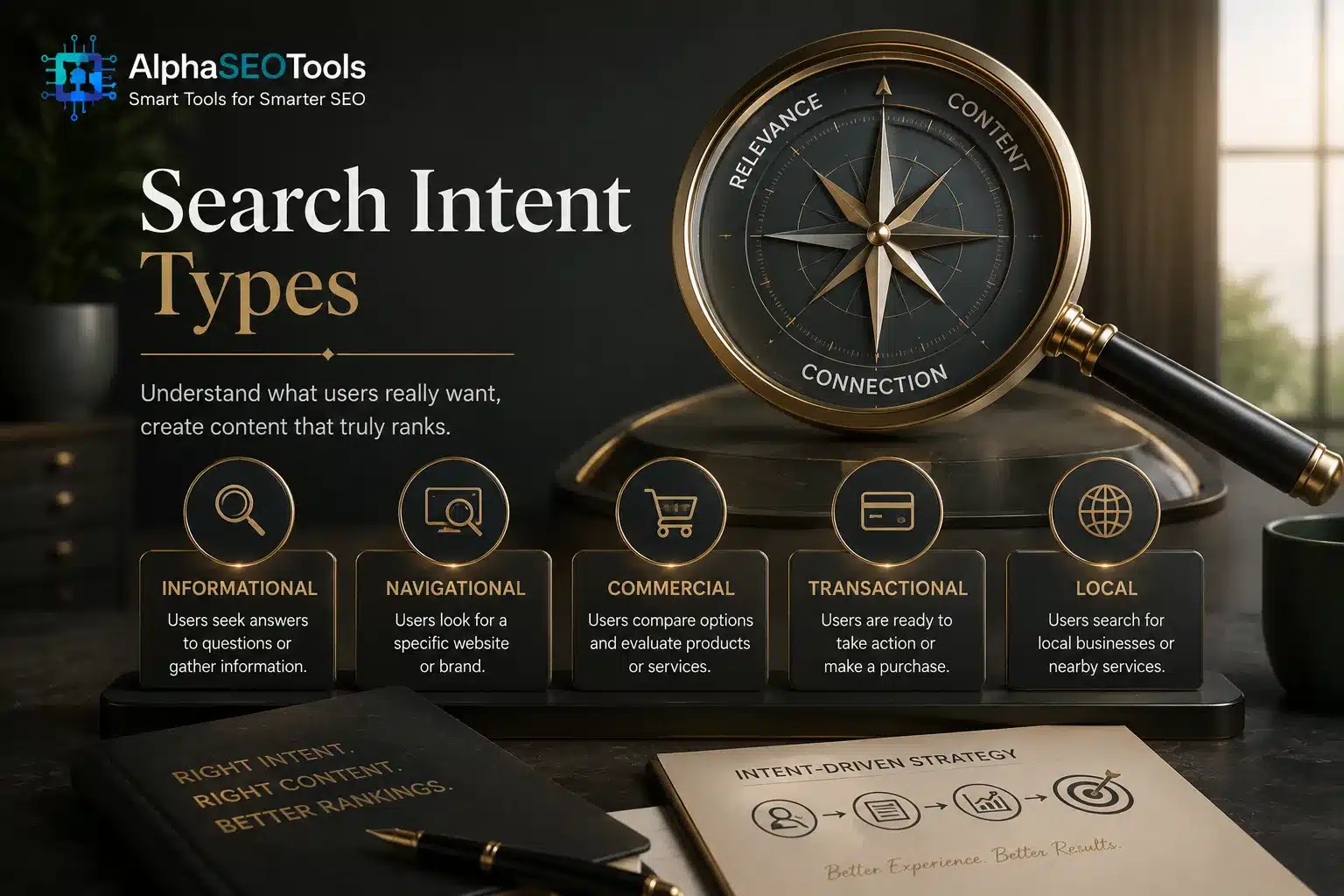
Not all searches trigger AI Overviews equally, and understanding this can completely change your content strategy. Here’s the breakdown:
- Informational queries trigger AI Overviews 47% of the time
- “Reason” queries—those “why” questions—trigger them 59.8% of the time
- Definition queries trigger them 47.3% of the time
- Transactional queries trigger them just 8% of the time
If you want to get cited, focus your content strategy on informational, question-based, long-tail keywords rather than commercial intent keywords that rarely trigger AI summaries. Write content that answers questions, explains concepts, and provides definitions—this is where the citations are happening.
5. Build Brand Recognition
Here’s something surprising that most SEOs completely miss: brand mentions correlate far more strongly with AI citations than backlinks do. Ahrefs’ Brand Radar analysis of 76 million AI Overviews found that brand mentions have a correlation of 0.664 with AI citations, while backlinks correlate at just 0.218. AI systems care about who you are, not just what you’ve written.
YouTube mentions show the strongest correlation with AI Overview visibility, and YouTube is now the number one cited domain in AI Overviews overall. Get your brand mentioned on YouTube and other high-authority platforms, and watch your citation rates climb. This means investing in video content, getting featured on podcasts, and building real brand presence beyond just your website.
People Also Ask
What About the Recovery Signs?
Here’s something interesting that might give you some hope in what feels like a hopeless situation. After bottoming out at 1.3% in December 2025, the click-through rate on Google’s AI Overviews climbed to 2.4% by February 2026, which represents an 85% jump in just two months. Searches without AI Overviews are getting more valuable too, with CTR on those queries increasing from 2.8% to 3.8%.
The picture isn’t all doom and gloom. AI Overviews are changing and evolving, the systems are getting smarter about citations, and smart operators are learning to play the new game. The ones who adapt quickly are the ones who will win, and the ones who complain and do nothing will continue to watch their traffic disappear.
Conclusion
Here’s the honest truth about where we are in 2026, and I’m not going to sugarcoat it for you. Ranking isn’t the finish line anymore. Featured snippets aren’t the holy grail they used to be. Zero-click isn’t a niche concern—it’s rapidly becoming the default experience for the majority of searches. The new goal, the only goal that really matters anymore, is recognition. Being cited. Being the answer. Being the source that Google’s AI trusts enough to mention by name.
Google’s AI Overviews aren’t going anywhere, and generative search is undeniably the future. AI Mode is expanding rapidly. ChatGPT, Perplexity, Gemini—they’re all part of the same fundamental shift toward answer-based, citation-driven search. You can fight it, complain about it, or pretend it’s not happening. Or you can adapt, evolve, and learn to play this new game.
The brands that win in 2026 and beyond aren’t the ones with the highest rankings. They’re the ones with the deepest authority, the clearest structure, and the most citable content. They’re the ones who realized that ranking isn’t visibility anymore. Citation is. And once you understand that shift, everything else starts to make sense. Your entire content strategy needs to change. Your metrics need to change. Your definition of success needs to change. The old game is over. The new game is just beginning, and the winners are being decided right now. Don’t be left behind.
This guide was updated in 2026 with the latest data on AI Overviews, Google SGE, and generative search optimization.
Regards: Team Alpha SEO Tools